Opinion piece: this article represents the perspective of the author.
After years of deferred obligations, strained services, and short-term thinking, the real question is whether we continue managing decline in slow motion or begin restoring the capacity our town needs to succeed.
A municipal budget is the most serious vote a Town Council takes. It is where values, obligations, constraints, and consequences all meet. It affects the tax bill residents receive at home. It affects the services families rely on. It affects the schools that shape our children’s futures. It affects whether we govern for the next news cycle or for the long-term stability of Rocky Hill.
The Cost of Carrying Too Much for Too Long
When many of us were elected last November, we knew this budget process would be difficult. What I found after taking office was a town and school system that are succeeding in large part because the people inside them have been carrying more than they should have been asked to carry. Teachers, administrators, town staff, public safety personnel, library staff, senior center staff, human services staff, and many others have been stretching their roles through dedication, resilience, resourcefulness, and endurance.
That speaks well of them. It does not speak well of the governing pattern that made that level of strain necessary.
A Familiar, But Broken Budget Pattern
For too long, Rocky Hill was caught in a familiar routine: short-term budget relief, politically manageable cuts, and delayed obligations pushed into the future. The problem is that the future eventually arrives. Deferred pension obligations, deferred staffing needs, deferred investments in services, deferred infrastructure, and deferred capacity in our schools and town operations eventually become more expensive, more urgent, and more dangerous.
That is the doorstep Rocky Hill is standing on now.
What This Budget Begins to Correct
The budget we approved last night begins the work of correcting that trajectory. It increases part-time support at the Senior Center, the Library, and Human Services. These are resident-facing services. They affect seniors, families, children, and residents who need the town to function with competence and care.
It increases funding for Fire Department training, because public safety cannot be treated as a place where we hope everything works out. Preparedness costs money. Lack of preparedness costs more.
It strengthens our economic development capacity by upgrading that position to full-time and adding outside grant-writing support. That is exactly the kind of forward-looking investment Rocky Hill needs. We should not simply wait for opportunity to find us. We should be organized enough, professional enough, and ambitious enough to pursue it.
Protecting the Schools That Define Our Town
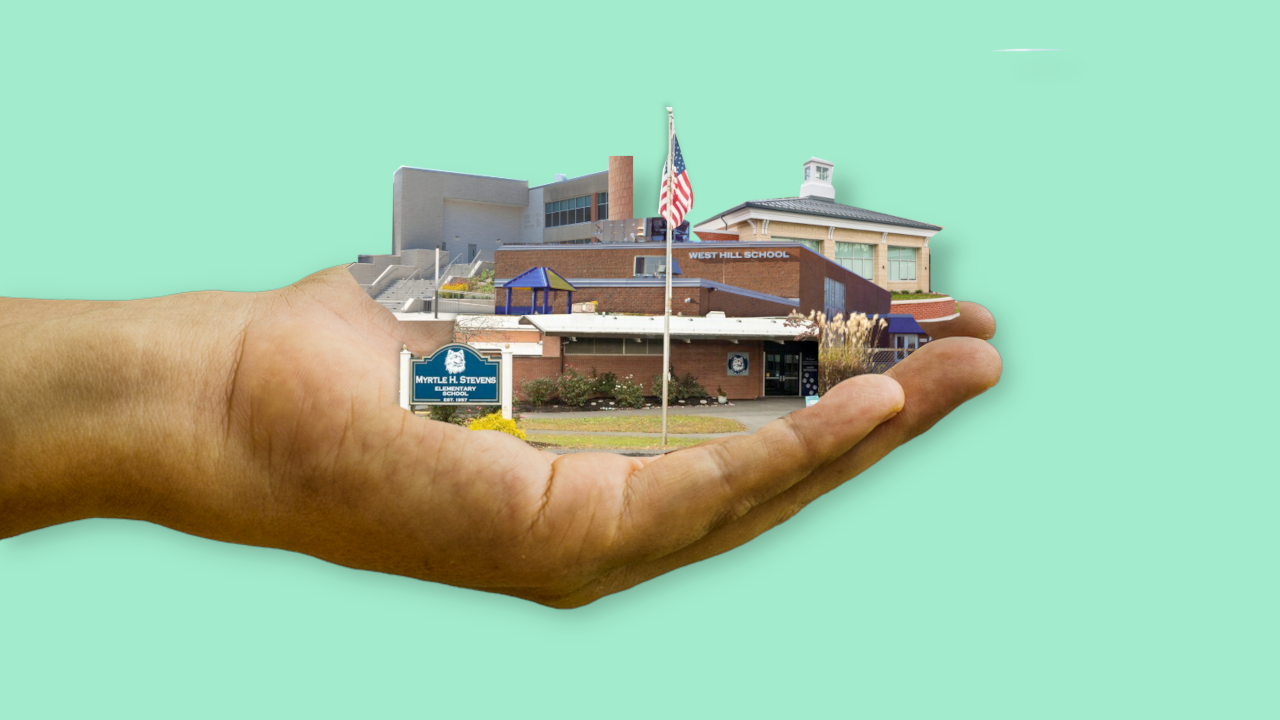
On education, this budget maintains the bulk of the Board of Education operating budget, with only a modest adjustment of $250,000 that can hopefully be targeted toward central office. At the same time, it funds additional student-level support in meaningful areas: mental health, social work, class size reduction, and special education. Those are not ornamental additions. They go directly to the experience of students and the capacity of educators to do their jobs well.
Rocky Hill’s schools are central to our town’s reputation. They are part of why families want to live here. They are part of why our real estate market and property values remain strong. They are part of the civic inheritance we are responsible for protecting.
Discipline and Vision Can Coexist
This budget also reflects discipline. Through targeted adjustments across the whole budget, we found more than $1.7 million in savings. That matters. It shows that this was not simply a matter of saying yes to everything. We made real reductions. We scrutinized the numbers. We worked through the budget in detail.
That is the difference in the governing approach residents are seeing now. The answer is not to spend without discipline, and it is not to cut without regard for consequence. The answer is to look honestly at the town’s real obligations, make targeted adjustments where they are justified, and still invest in the capacity Rocky Hill needs five and ten years from now.
Through extraordinary coordination between our state delegation and leadership here in town, we also secured substantial state support that helps lessen the pain for taxpayers. That was not a gimmick. It was real, hard-fought relief, and it is going a meaningful distance in this budget process.
Affordability Requires More Than Avoidance
I understand why people are frustrated. I understand why any increase feels heavy. Nobody should pretend this is easy. But there is also a cost to inaction. There is a cost to pretending that the same familiar routine can carry us indefinitely. There is a cost to exploiting the dedication of good people until exhaustion becomes an operating model.
That is not responsible government. It is the quiet accumulation of risk.
The question before Rocky Hill last night was whether we would keep managing decline in slow motion, or whether we would begin restoring the capacity this town needs to succeed. This budget is not perfect. No budget is. But it is serious. It is targeted. It is more precise than the budget habits that helped create the hole we are now trying to climb out of.
Last night, the alternative offered to this budget reflected the same familiar routine that helped bring us to this point: cut what is politically easiest, postpone what is structurally necessary, and call the delay fiscal discipline. That approach may sound restrained in the moment, but it does not erase the underlying need. It moves the consequence to a later year, when it is usually more expensive, more disruptive, and harder to reverse.
I also want residents to know that the elected officials who worked through this budget put enormous time, energy, and ingenuity into the process. This was not casual. It was not automatic. It was the product of long meetings, difficult conversations, detailed review, and a sincere effort to balance affordability with responsibility.
A responsible budget does not only ask what is politically easiest in a given year. It asks what happens if we keep delaying the same needs, keep stretching the same people, keep hoping that resilience can substitute for investment, and keep postponing the future capacity of the town.
A Necessary Corrective Step
I believe this budget is a necessary corrective step. It protects core services. It invests in students. It supports seniors and families. It strengthens public safety. It gives economic development the tools to compete. It begins to treat the future as something we are obligated to plan for, rather than something we can keep putting off.
For those reasons, I voted to support this budget.
But more than that, I voted to end a pattern.
Rocky Hill cannot keep calling deferred obligations “savings.” We cannot keep asking excellent employees to compensate for inadequate capacity, or keep asking strong schools to remain strong while the supports beneath them are gradually thinned.
We cannot preserve affordability by allowing the foundations of town government to weaken quietly beneath our feet.
Real fiscal responsibility requires more than restraint. It requires foresight. It requires the discipline to distinguish a cut from a consequence, and a savings from a cost we have merely postponed.
There is no more road left for Rocky Hill to kick the can down.
At this point, repeating the old familiar pattern would not preserve stability. It would consume it. The consequences would not remain theoretical for long. They would show up in strained classrooms, thinner services, deferred repairs, weakened capacity, and costs that become harder to control precisely because we waited too long to face them.
Governing With Vision
Rocky Hill is a strong town because generations before us made serious decisions that gave us good schools, safe neighborhoods, reliable services, and a community worth choosing. In recent years, too much of that long-term perspective was displaced by short-term budget habits that deflected, dismissed, and delayed the realities in front of us. Our obligation now is to make decisions worthy of that inheritance.
That requires vision. Not vision as a slogan, and not vision as a campaign word, but the practical discipline to see the town as it will exist years from now if we either meet our obligations or avoid them. Governing with vision means understanding that the easiest cut in a budget meeting can become the most expensive problem tomorrow. It means caring enough about affordability to protect the services, schools, infrastructure, and public safety systems that make Rocky Hill worth investing in at all.
Last night’s vote was a choice between continuing the familiar pattern of deferral, and beginning the harder work of repair. It was a vote to protect what works, mend what has been excessively strained, and plan for the town we intend to remain.