Category: Local

  • Mayor Marotta, if Rocky Hill schools are fully funded, why are we cutting programs?

    Mayor Marotta, if Rocky Hill schools are fully funded, why are we cutting programs?

    This article represents the opinion of the author and not of the Rocky Hill Board of Education. 

    Dear Mayor Marotta,

    I was a bit confused by a recent message you published regarding our schools. As you know, the Board of Education was forced to make significant reductions to its budget. If, as you’ve stated, you believe the district was fully funded, I’m trying to understand why you think such drastic measures were still necessary.

    While it is true that the Town Council increased the BOE budget on paper, the messaging overlooked the substantial cost drivers we are obligated to meet, namely, negotiated salary increases and rising insurance costs. These contractual and industry-standard expenses are essential to remaining competitive, particularly at a time when districts across the state are facing a teacher shortage. 

    Our district already ranks among the lowest in per-pupil spending statewide, and the lowest within our DRG, yet we perform in the 20s academically. That should demonstrate that the board is fiscally responsible and invests wisely in our classrooms. 

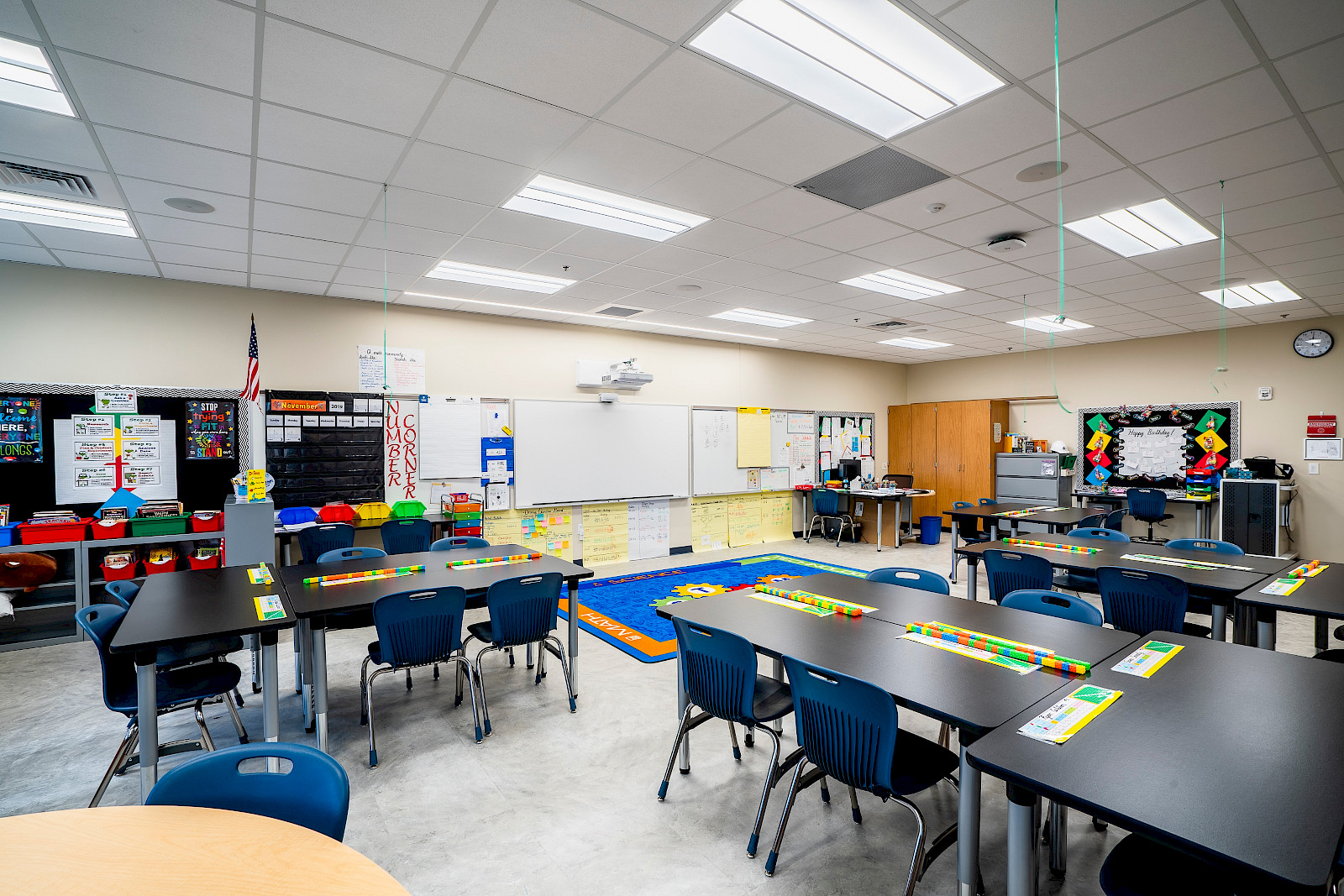
    The impact of the cuts this year is visible. We have 2nd-grade classrooms with 23 students, 4th-grade classrooms with 24 students, when research consistently shows that early elementary literacy thrives in smaller settings, ideally around 18 students. Even a small increase materially affects instructional time, particularly during foundational reading years.

    It is my understanding that the Town Manager recommended a $350,000 reduction, and the Republican members of the Town Council chose to almost double that number, cutting $650,000. I am interested in understanding the rationale behind exceeding the professional recommendation. Are we intentionally moving toward being the lowest-funded district in the state?

    I also want to acknowledge something you mentioned, that the Town Council does not make line item decisions for the BOE budget. That is absolutely correct. However, the Town Council does control the purse strings, and the funding level directly determines what programs and staffing they are able to sustain. For that reason, open, accurate, and consistent communication between the BOE, the Town Council, and the liaison role is essential. It’s unfortunate that the school liaison is not held accountable for not providing reports or attending BOE meetings. 

    I believe stronger communication could have helped avoid some of the challenges we’re now facing. These cuts had real instructional consequences. The BOE was unable to hire additional teachers to reduce class sizes. They could not fund a  World Languages program at Moser. These are not minor adjustments; they are program losses that directly affect students.

    If you believe Rocky Hill Schools were fully funded, how do you reconcile that with the need to cut programs and increase class sizes? Do you believe these outcomes are insignificant, or do you disagree that the cuts caused them?

    I believe our schools are great, and want to make sure they continue to be. Our goal should be to move the district forward, not backwards. The Central Office has done an exceptional job managing an increasingly limited budget, but it cannot overcome structural underfunding. Without appropriate support, sustaining the quality of our schools becomes an impossible task. 

    The Democrats running for Town Council and the Board of Education this election will not only prioritize funding necessary programs and maintenance for our schools, but also collaborate better with our educators. That’s not just my opinion; it is the opinion of the Rocky HIll Teachers Association, which endorsed the entire Democratic slate. Rocky Hill residents must vote for change to ensure the best environment for our students and teachers. 
  • We Need More Walkable Community Projects Like This One in Rocky Hill

    We Need More Walkable Community Projects Like This One in Rocky Hill

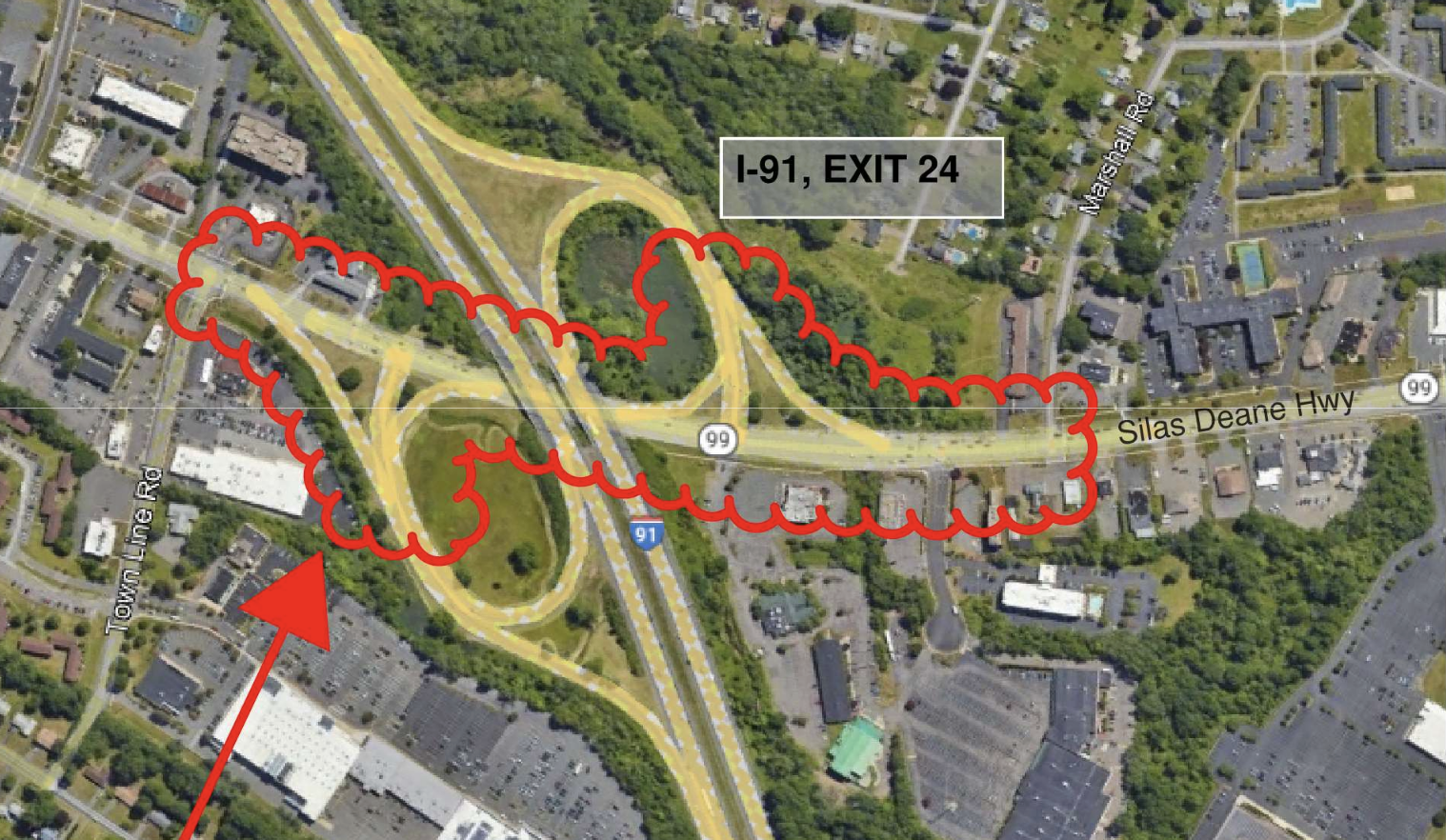
    Rocky Hill residents can look forward to new sidewalks in a much-needed part of town. Connecticut Department of Transportation (CTDOT) State Project No. 0118-0191 will install new sidewalks to both sides of Route 99 (Silas Deane Highway) from Town Line Road to Marshall Road including under the I-91 overpass in Rocky Hill, CT.  Project Manager Melanie Zimyeski has stated the project will begin in the Spring of 2027.

    A map showing placement for sidewalks and crosswalks.

    If centering this project on active transportation, there is a lot of good news here. The stretch of road in question has three bus stops that promise to be adjacent to truly safe and comfortable crosswalks.  

    Those crosswalks are desperately needed. Back when the Town had a cute gelati shop named “Rita’s” I would pop over for an icy treat, and one day decided that I wanted to go from Rita’s to Orchard Street, en route to Parsonage, and back to Old Main Street. I could manage it, but only after dangerous crossing of highway lanes and ramps. Even with gelato to motivate me, the experience was a demonstration that Big Highway has taken so much away from the lived experience. Manageable fixes like investing in safe infrastructure can restore access to these “no go” zones.

    Providing access to this stretch of road will enable pedestrians to visit more local sites on foot. Duck behind the cavernous Stop & Shop and Walmart structures, and you’ll find a car free fire lane that dumps you onto Orchard Street.  

    From there, take Orchard back to Parsonage and Rocky Hill High School, or, travel west on Water Street to Mill Woods Park, and beyond that, Wolcott Hill Road, and the extraordinary D&D Market. Now I’ve gotten off track, and I’m nowhere near the Silas Deane, but that is part of the point: connectivity between roadways, between residential, and between retail. 

    The Silas Deane Exit 24 project is paid for with federal and state money, and residents are rightly excited for it. In my experience, however, once there is a question of spending local resources on pedestrian infrastructure, the conversation swiftly changes. Inevitably people will argue against investing in the infrastructure, relying on what I call the “not alotta people” theory, which claims that the absence of pedestrians and cyclists on our roads is evidence that those people don’t exist. 

    Be careful questioning “how many people use” something when your observation is traveling by car at 35-40 mph.  To see a road and accurately observe its users, I would recommend standing at the location for 15-20 minutes, and you will see multiple pedestrians and cyclists, and other modes, traveling through this area. If you stop for gas at “Mylz” across from Marshall Rd (and Taco Bell, and the Howard Johnson’s big chair!) keep an eye on the roadway under the 91 bridge. There is definitely a need for non-vehicular road users at this location.  You will see activity there in what’s known as a “desire path,” where the grass is worn down to dirt, by shoes, and bike tires, over the years. When safer, that usage will increase exponentially, and the State’s management of this space will be worth every penny.  

    “Desire lines” or desire paths are formed by walkers essentially voting with their feet. (source)

    But let’s also consider that there is a very, very good reason why not alotta people use it. 

    “It” is dangerous, and if you have the luxury of options, you will avoid “it”.  Any moral decision is based upon how many people would prefer to use “it” not how many people are currently (and reluctantly) using it. “Not alotta people” want to travel along  that dark and dangerous walkway. But add safety elements, infrastructure, (and a tasty taco truck?), and suddenly people will want to go there! This is known as retrofitting a road to suit the changes in society.  CTDOT State Project No. 0118-0191 is doing just that.

    The proposed project is great, but can be greater as a launch point for even more safety, beautification, and a stronger sense of place. As suggested by local advocates including members of Bike Walk Wethersfield, the below recommendations for the State Project are worth mention:

    • 10′ maximum travel lanes & 6′ sidewalks (from 11′ & 5′) on Route 99 between ramps
    • Slow down the Silas Deane and prioritize pedestrian safety over “level of service”
    • Add clear white light under the 91 overpass
    • Add  gateway murals 
    • Add a sign: “Welcome to Historic Rocky Hill: Everyone is Welcome Here”
    • Add pollinator gardens & street trees
    • Reimagine the Silas Deane Highway (which suggests high speed motorists) as the more inclusive Silas Deane Boulevard

    Thank you to the Connecticut Department of Transportation for taking on this project. Our local leadership should follow this example and provide a clear path to develop our sidewalk networks. Rocky Hill’s roads should be for all their users, including pedestrians and cyclists.  If you are excited for the upcoming changes in Silas Deane, consider joining the Walk Bike Rocky Hill community and supporting other changes to benefit our walk/bike infrastructure. 

    Opinion piece: This article reflects the position of the author and not necessarily that of the Democratic Town Committee.