Category: National

  • CT Congressman Larson fights to extend Health Care Tax Credits

    CT Congressman Larson fights to extend Health Care Tax Credits

    From the desk of Congressman Larson:

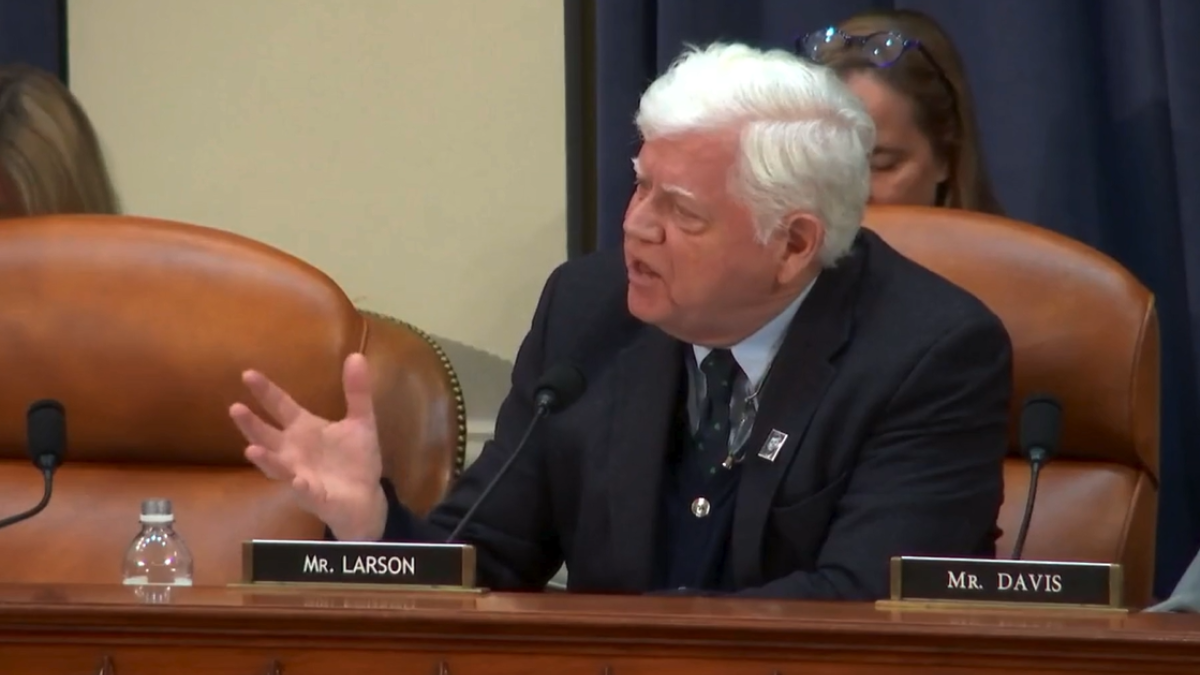
    Congress is back to work in Washington, and I am continuing to fight to lower skyrocketing health care costs and ensure everyone can access the care they need. Last week, 17 House Republicans joined Democrats to extend the Affordable Care Act tax credits 20 million Americans rely on. We had the votes to pass this bill at the end of the year, but Republicans shamefully decided to leave town early for the holidays, allowing these critical tax credits to expire.

    It’s now up to the Senate to take action and send this bill to the President’s desk to grant families the relief they need. In the wealthiest nation in the world, no one should have to choose between health care and paying the rent.   

  • Jillian Gilchrest in Rocky Hill: “I want to elect Democrats who actually have a vision of where we can go as a country. “

    Jillian Gilchrest in Rocky Hill: “I want to elect Democrats who actually have a vision of where we can go as a country. “

    Candidate for Congress Jillian Gilchrest spoke to Rocky Hill Democrats on January 13, 2026. The following is a transcript of her remarks and responses. The transcript has been lightly edited for clarity. 

    Background

    JILLIAN GILCHREST: Good evening everyone. It’s so nice to be here in Rocky Hill. This is my first time getting to say congratulations in person to Mayor Allan Smith, and congrats to all of you on such an amazing municipal election. 

    So a little bit about myself: I live in West Hartford. I’m currently a state representative. I’m a social worker, and I’m a mom of two teenagers, which might make me qualified enough. But some background on myself, I’ve just always kind of been driven by an urgency to address injustice. 

    Out of college, I worked as a child advocate at a sexual assault crisis hunter in Willimantic Connecticut, and it was that position that motivated me to go to school to get my master’s in social work with a focus in policy practice. After that, I went on to work at a number of nonprofits in the state of Connecticut, working on reproductive rights, economic security, and preventing and addressing gender based violence. 

    In 2018 I ran against a 23-year Democratic incumbent for the State House. I did that because he was considered a solid Democratic vote, but I didn’t feel like he was using the seat with the urgency that we needed at the time, and we were successful. We won by 150 votes in an August primary. And since then, I’ve gone on to push for change at the legislative office building, paid family and medical leave, abortion access, preventing gun violence, increasing wages for essential workers, and health care reform, including this past legislative session, when I had the pleasure of working with your good representative, Representative Wood and Senator Lesser on a prescription drug bill to reduce costs for prescription drugs. 

    The Current Crisis

    I don’t have to tell you what’s going on right now in this country. It seems like every single minute is incredibly intense. What the Trump administration is doing is cruel and it’s destructive and it’s dangerous, and with Trump and the Republicans having complete control, we’re just seeing this country move in a direction I never thought we would. Certainly we need to be addressing that and calling that out. 

    But unfortunately, they’re not. The Republicans aren’t the only ones to blame for where we are currently as a country. We’ve lived through a generation where donors have influenced our public policy and where special interests have been prioritized above the public good. Right now in this country, the income and wealth inequality is the highest it’s ever been, as is the CEO to worker pay gap. Things just keep getting more expensive for all of us because billionaires and corporations don’t want to pay their taxes, and so I for one am sick and tired of special interests and billionaires running our government. If we want to change how Washington works, we’re going to need to change who works for us in Washington, and I want a politics that puts people first. 

    I want to elect Democrats who actually have a vision of where we can go as a country. 

    I ran for the state legislature because I was not willing to wait for the change that Connecticut needed, and I’m running for Congress because I’m not willing to wait again to make a difference. I’ve spent my entire career listening to people, learning from their experiences, and then translating that into effective public policy. And that’s what’s guided me in Hartford, and it’s what’s going to guide me in Washington, and certainly in the immediate we’re going to have to defend against Donald Trump, and we’re going to have to hold him and his enablers accountable, but I want to elect Democrats who actually have a vision of where we can go as a country. 

    Issues

    I believe that the government can actually do good by people. We pay into the government. The government should invest in us. It should support us. And so some of the things I’ll be looking to do if elected into Congress is lowering costs by not allowing corporations to write their own rules, by creating and establishing living wages, not just a minimum wage. 

    I’m talking about a living wage so that people can actually live and work with dignity and respect. At the legislature, I co chair the Human Services Committee, and to have to see people come in time and time again explaining how they work two and three jobs and are sometimes living in their car, have to receive Medicaid, have to receive SNAP benefits. It shouldn’t be this way. I also want to enact social supports in the vein of Social Security and Medicare, including paid family leave, childcare and housing. These aren’t “nice to haves”. Other countries have these, and we could too. 

    I want to take profit out of healthcare. The model does not work. We need to be focused on people having access to the care that they need. I met a family of three who pays $3,000 a month out of pocket for their health care, and when their toddler needed to go by ambulance to the hospital, she had to pay another $2,000. I also met a family that started their own small business. It’s going really well. However they can’t afford health care anymore. She might have to leave the small business and try to find a job in her 50s, just so they can have health care as a family. 

    And I also want to invest in public education. Before the Trump administration has torn down our public education system, we haven’t invested in it like we need to as a country. I’m the daughter of two public school teachers. I’m here today because of public education. And I thought, coming out of the pandemic, we continue to shed some light on the respect for teachers, but we have not. We need to pay teachers what they’re worth. We put a lot of expectations on our schools, which makes sense, because that’s where our children are all day. But we then have to pay for those things, and we need to invest in social supports in the schools as well. 

    I wear a lot of hats. I serve in a variety of roles, social worker, advocate, State Representative and mom, but what I’ve learned in each of those is that if you just listen to people, they’ll tell you what they need. And right now, Washington is not listening to us, and so I’m asking you to believe in a different type of campaign and in a different type of politics. I hope you’ll join me in this journey. My website is voteforjillian.com. I’ve put out a number of platforms already, and we’ll continue to roll them out, including campaign finance reform, health care, and food. And this week, I released a position paper on a fair and just economy.

    Questions and Answers

    Rocky Hill Democrats asked Jillian about her policies and plans. The questions have been shortened and responses have been edited for clarity. 

    Can you speak to your thoughts and ideas on affordable green energy, when we have our federal government trying to stop offshore wind and solar?

    Well, yes, because many things are tied together, I recognize that we live in a capitalist economy that said we have tips so far to where profit is driving everything, including environmental policy, where we need to rein that in 100% and so right now, we are not moving anywhere when it comes to environmental policy, because big industry is dictating our public policies. And so one thing would be campaign finance reform, because certainly we don’t want to keep electing candidates who are beholden to those entities. But also it is putting in certain regulations so that profit isn’t driving those decisions. I also would like us to see us do kind of what the New Deal did in establishing a proposal to push out jobs in the green sector. That is doable. It would both help with the policies we need to roll back what’s been happening in our environment, but also support workers.

    Do you believe in terms instead of term limits, instead of people running forever?

    I am open to term limits, so yes, I support it, but I do believe that if the goal is to get different people into office, we have to look at campaign finance because even if we had term limits, if money is so driving, who gets to run and serve. We’re going to get the same people the other to get in the policy weeds on it, because we have little time. 

    Term limits is a constitutional amendment, so we would need all the states to ratify it. Not impossible, we can do that. That’s a long term goal. And so yep, I would put that in my long term goal and start working towards.

    You can find on my website my policy platform for campaign finance, recognizing that Citizens United is probably not going to be overturned in the next few years with this Supreme Court. What we can do is, I’m putting out there, okay, corporation, you’re considered a person. You’re donating this amount of money. We’re going to tax that money and use that tax, that revenue, to fund campaign finance, funds like we have here in the state of Connecticut so that we can publicly fund people to run for office. So I think they’re short term solutions, long term solutions, and I would be open to terms.

    The political climate feels like an uphill battle, especially with Republicans controlling everything, every branch, and hopefully the midterms will help tip that balance a little bit back in like what we envision to be like the way forward. How do you see your role if you were to serve in the house? 

    We as Democrats need to go speak to their voters. Because right now, it seems to me that the Republicans in Congress aren’t taking action because they’re afraid of one thing, which is keeping their seat, and that keeping that seat is connected to Donald, and they don’t want to upset him. They don’t want to come in his path. So we need to speak to their voters in an aggressive way. Not in an accusational way. It’s going and speaking about the issues that matter to them and illustrating how a certain policy gets them there, so that they’re questioning their elected officials and then holding them accountable. And I think it’s doing that work.

    I’m very concerned that we’re looking at the breakdown in the order of how government’s supposed to work. What is the role that you will play towards trying to hold people accountable for what they’re doing? 

    You need to address what is happening, what has happened, all at the same time. Which is why you do need someone who can multitask, and if we keep very good records on how to work on different things, but in all seriousness, because we need to hold them accountable. 

    I support impeachment, not just for Donald Trump, but for the Republicans who have enabled this, for those in his administration, because we need to recognize that they have violated our laws, the Constitution. 

    And a congressperson isn’t just in that space, right? The role is about coming back and connecting with the community, having conversations about the work I’m doing, why I’m doing it, and how it’s going to move us in a certain direction. It’s coming back and listening to all of you and understanding what do you want me to do, what do you need me to do? It’s working with advocacy groups and figuring out how best and what levers to pull to make change. And so it’s all those things at the same time, but certainly it’s about  holding them accountable. 

    But I do think as Democrats, we also need to start putting out this vision. What is the alternative? We can’t just keep saying we’re not as bad. What are we actually moving people toward?

    And for far too long, we’ve been talking without action, and in those next two years where we can’t make legislative action, it’s us connecting with the community and illustrating how we want to get there that I think people need.

    You were the only person in the state, other than Kerry Wood and Matt Lesser in the state legislature, to win as a nonendorsed candidate when you ran in 2018. The other candidates in the race will receive a lot of money. What do you think you need to raise to compete in a race like this?

    I have a three-pronged approach. I’m focused on reaching out to democratic town committees, because there’s a convention in May, and I’d like to at least get 15% to get on the ballot. There’s also reaching out to the general public and letting them know more about myself, and listening to them and hearing what they want, and then raising the money.

    I was never going to have a million dollars coming out of the gate. I’ve been told you can be outspent more than seven to one, and that I should raise close to a million dollars. 

    What’s the money for? You have staff on the campaign, and you need to pay for materials to get the message out there. Eventually we’ll need to pay to be on TV. 

    I would just say that for those who are following closely, money is being very closely connected with viability. And I think that’s a dangerous trap, in particular for Democrats, considering money is a big part of the problem of where we are as a country right now, and so having someone who is heavily funded by corporate PACs might not be the best thing we want, and also someone who has a lot of connections to wealthy individuals and can get people who max out right out of the gate also might, you know, be a little concerned. Maybe not, but I’m trying to raise money from everyday people. And so it’s taking me a little longer, but like I said, it’s a marathon, not a sprint, and so I’m working at it day in and day.

    You’ve talked about wanting to get money out of health care. Can you say a little bit more about what that looks like? 

    I am open to anything that gets us closer to that. I do stand for and believe in universal health care. I know that people would think that’s a trippy position to have in the insurance capital of the world, but I think that we actually have a unique opportunity to work either with the insurance companies or say to them, you need to get out of the way. 

    Because right now, the model isn’t working. There’s also pushback from people saying, “the government can’t be in the business of doing health care.” I have state health insurance, and it’s fantastic, so I think they can.  

    I think we just need to shift the way we think about it, and recognize that the profit driving it means that you’re going to get less care every year. Things are going to be dropped, prices are going to go up, and so we really need to shift that model, and so I would move us towards universal health care.

    There are illegal actions taken by ICE, illegal action taken in Venezuela, illegal action threatened against Greenland. The list can go on and on. What role do you see in the House of Representatives and yourself and accountability? 

    I’m running for Congress, I’m up here speaking. I’m also, over the weekend, freaking out. I mean, it’s just absurd that [annexation of Greenland] is even being uttered, and then the frustration with Congress because he already acted in Venezuela. 

    If I am elected, I will be every single day pushing with my colleagues, on my colleagues, speaking with advocacy groups in the community, to say we need to be elevating this issue. We need to be talking about this. We need to be pushing in these ways, never letting a minute go by because it is of such urgent nature. 

    When it comes to immigration, I support getting rid of ICE. What frustrates me is that there have been decades of non action on immigration reform. Fits and starts, okay, but it be, then it doesn’t go anywhere, because it’s not really popular enough.

    You need to work at something. Take paid family and medical leave. I had the privilege of getting to vote on that in my first year in the legislature. Eight years prior to that, I started the paid family leave coalition. I ended up handing it off to other people when I went to work with different advocacy groups, but I worked on it for years. 

    When I started that coalition, people laughed at me, right? They said, this is pie in the sky. That was the phrase used. It took us eight years. We got it done. You don’t just stop working on something because it’s not going to be popular in the next election, considering elections are over two years. So at the same time that we are holding them accountable, we also need to be pushing for that change. 

    You have a pool of a lot of folks like the incumbent, who’s got a very strong position in Connecticut, and also his stand on Social Security, where he’s been a leader. How can you position yourself against them?

    I served in the legislature. This is going to be my eighth year, four terms, next to Congressman Larson. I have the most legislative experience, and in some ways, I’d argue, I’ve been able to push for more in those seven years than maybe he has in his entire time. 

    Because yes, it is, it is valuable and important. Social Security, hands down, I would 100% support the policy he supports. But you can’t just work on one thing, and so I think what I bring to the table is a different skill set as an advocate turned legislator. 

    I understand that it’s not just about signing on to a bill. It’s about the work that goes into pass that bill, and that takes connecting again with the community, with advocacy groups, with your colleagues inside the building, with folks back here to push for that change until you get it across the finish line. 

    It’s also today more important than ever before, the way we talk about things. What frustrates me and maybe frustrates some of you, is when it feels like a politician waits to see how everybody feels about something before they have a position. I think it’s important for us to be solid in where we stand on something, but then to figure out how to deliver that message in a very concise, clear way, because people don’t have a lot of attention span these day. That’s another skill set I have really worked on at the legislature, to be able to explain things and be able to pass legislation, and so those are some of the skills. 

    Your other opponents in this race are lawyers. Can you talk a little bit about how your advocacy background will kind of shape your decision-making as a legislator? 

    Are there any social workers in the room? Social Workers, we’re a special breed,  in that we are beholden to a code of ethics, and we are driven by changing injustice. 

    Some examples of what that’s looked like at the legislature. There have been times where I’ve been presented with, Hey, if you can kind of back off on your opposition to this bill, we could. We’ll pass your legislation. And I don’t do that. I don’t trade on policy just so that I can get a win that actually won’t help people. 

    The advocacy piece really comes in, and it explains it. My way of working is figuring out, like, Okay, what’s the goal? Right? What do we actually want to do? So we want to make it where life is more affordable for people. Okay, so where are all the variety of things we need to do to get us there? 

    That, again, is looking at corporations, the CEO to worker pay gap. Why is it that Walmart doesn’t pay their workers and then is benefiting off of our SNAP program, right? They’re one of the biggest recipients of SNAP well, maybe we should hold them accountable and rein it in a little bit so that. 

    Again, I get it. We are a capitalist society, but the profit you’re making at the expense of all of us having to pay into the system to support those workers, that’s not fair. 

    Another goal is a living wage. You kind of back it up and figure out who are all the different groups you need to speak with and work with, and what are all the different steps to get us to that policy solution? 

    I’m also in this to make change. That’s it. So I ran for office in 2018, I have loved my time in the legislature. I have felt that I have, like I said, really accomplished many things, pushed for the change I need, but I am now running for Congress, and so I have turned and said, Who is next? This is not my seat. Who comes after me? And that’s what I’ll do when I get to Congress. My brother made a joke and said, Oh my God, if you win, you have job security till you’re 80. That’s not the point. The point is to make as much change as I can and then turn and say who is next. And so I think it’s that that distinguishes me, maybe from other folks.

    What’s your plan on affordability for housing for people who are economically struggling? 

    There isn’t one solution, right? So it’s looking at a variety of things. 

    One piece to me is private equity. In my role in the Human Services Committee, we’ve seen private equity come into the state and purchase nursing homes, hospitals, and again, with that profit driven model, their goal is to make profit at the expense of the services. Well, they’ve also come in and bought up housing, and then are increasing the housing values. Other people can’t buy homes, and so we need to. 

    And what we’ve learned at the state legislature is we hit a ceiling. They’ll say to us, well, that’s federal. Only the federal government can regulate private equity. So I would be looking at private equity in terms of housing.

    I also, and this is from listening and learning to folks. So this just again, explained my process. I was speaking with a gentleman who was explaining that back in the day, the veterans program in the United States used to offer housing, and so we could model off of that and link it to employment that we need. 

    So certain employment in maybe rural areas where we have a lack of folks working, you can get housing support if you work for a certain amount of time in a certain field. You could get, you know, that piece. And then I’d say a third kind of leg to that, are the living wages. Because I would question, I would think, you, I don’t even really know you, but you’re probably not making as much as you should today, that you would have made 20, 30, 40, years ago doing the same job. So we also need to look at increasing those wages for both.