Opinion post: this article represents the perspective of the authors.
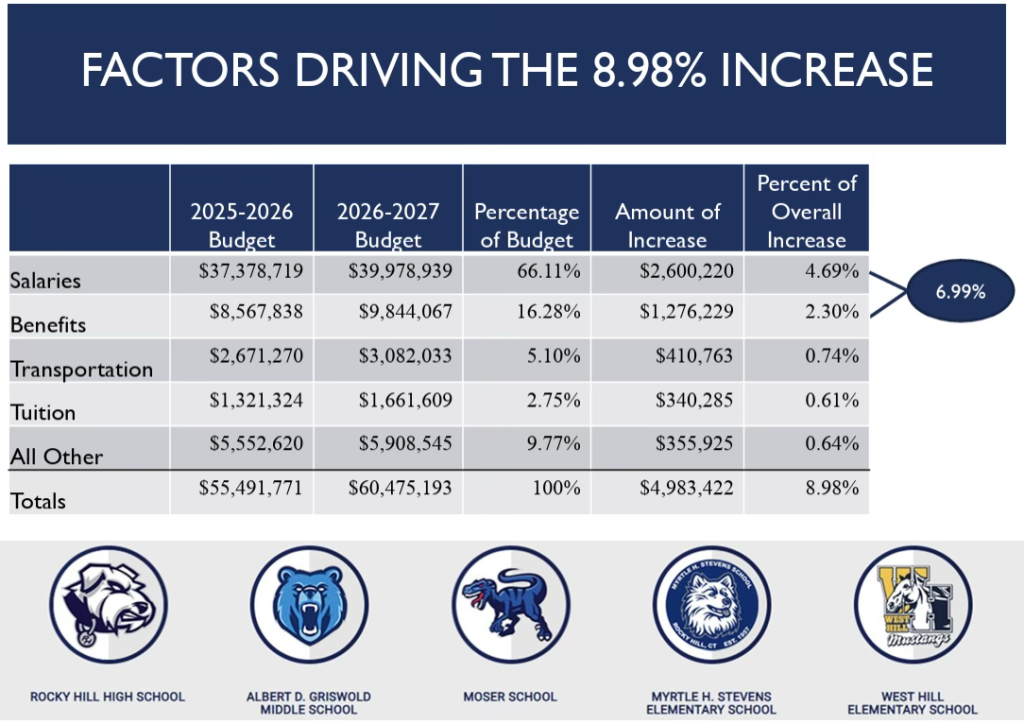
Over the past several months, the Board of Education has engaged in a thoughtful, transparent process to develop the FY 2026–2027 education budget. Following multiple public workshops, detailed discussions, and revisions, the Board unanimously adopted a budget of $60,475,193, representing an 8.98% increase over the current year.
We want to take a moment to share not just what was decided, but how and why.
This budget was built in public, not behind closed doors. Each public workshop provided an opportunity to examine the details, ask questions, and better understand the factors driving the increase. The final proposal reflects that collaborative process and a shared commitment to making informed, responsible decisions.
A key part of that transparency is understanding what is actually driving this increase.
Of the total 8.98% budget increase, approximately 7.73% is tied to salaries, benefits, and transportation. These are costs that are contractual or negotiated and largely outside of the Board’s discretion plus . These are essential obligations required to retain staff, honor agreements, and continue operating our schools day to day.
That means only 1.25% of the total increase is related to additional investments in programming, services, and supports for students.
In other words, the vast majority of this increase is not about expanding, it is about sustaining.
Like districts across Connecticut, we are navigating rising costs in key areas:
- Contractual salary increases necessary to retain and support educators
- Health insurance and benefits growth, including a significant increase in group medical insurance of over 17%
- Transportation costs that continue to climb year over year.
- Specialized services, including tuition for out-of-district placements
These are real pressures that impact every school district, regardless of size.
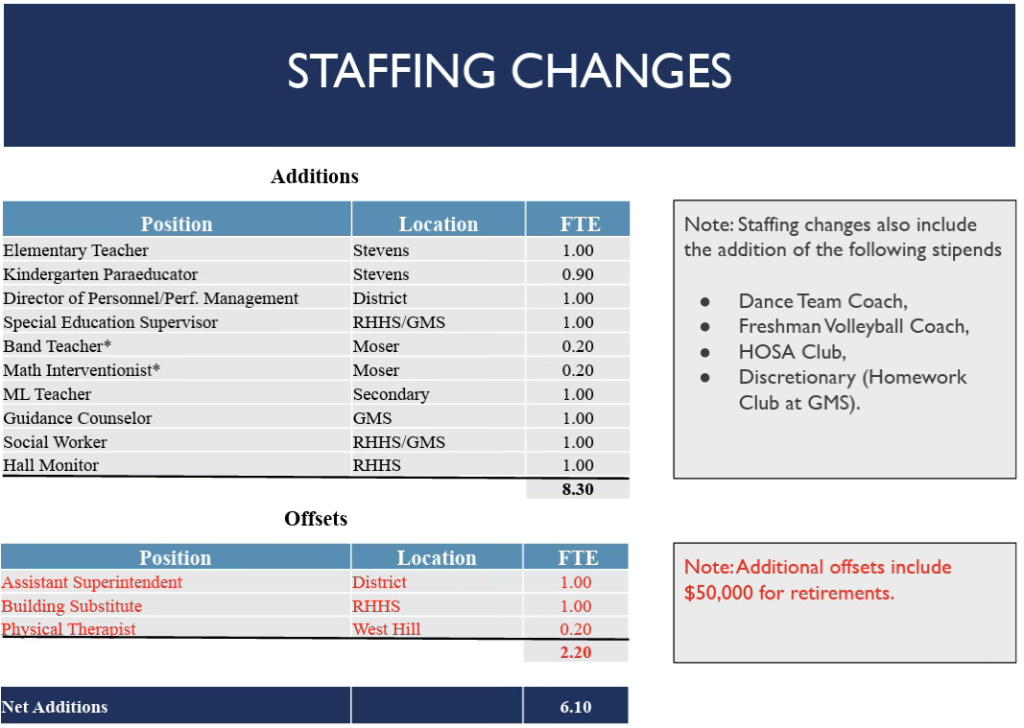
With this budget, we really wanted to be thoughtful about adding positions that we know are needed. Over the past six years, we’ve lost 11 elementary teaching positions. Some of that is due to a wave of covid retirements, but it’s also the result of years of underfunding that made it difficult to replace those roles. As a result, class sizes have increased, putting additional strain on both students and staff.
We’ve heard the community concerns around class size, and we have taken steps to address that. We have adopted a policy to lower classroom sizes, which will be phased in starting with kindergarten and working our way up through the grades. As part of that, this budget includes funding for an additional classroom teacher, a paraprofessional, as well as a teacher to better support our ESL students.
We also heard directly from parents at our January V.O.I.C.E. Committee meeting about the importance of supporting students’ mental health and overall well-being. In response, we’ve included funding for a social worker at both the middle school and high school levels, along with a Special Education supervisor to help strengthen supports for our students who need them most. We’ve also heard from the community about the disappointment surrounding the removal of World Languages at Moser School as a result of last year’s budget reductions. We want to be clear that we’ve heard that feedback. We are currently in discussions about the best way to reintroduce foreign language instruction and are exploring a range of options, including the possibility of beginning earlier at the elementary level, similar to what some surrounding districts have implemented.
We are also addressing supervision and administrative needs by eliminating an assistant superintendent position and adding a human resources director and the special education supervisor to cover GMS and RHHS. These changes help us respond to continued changes in our student and staff populations.
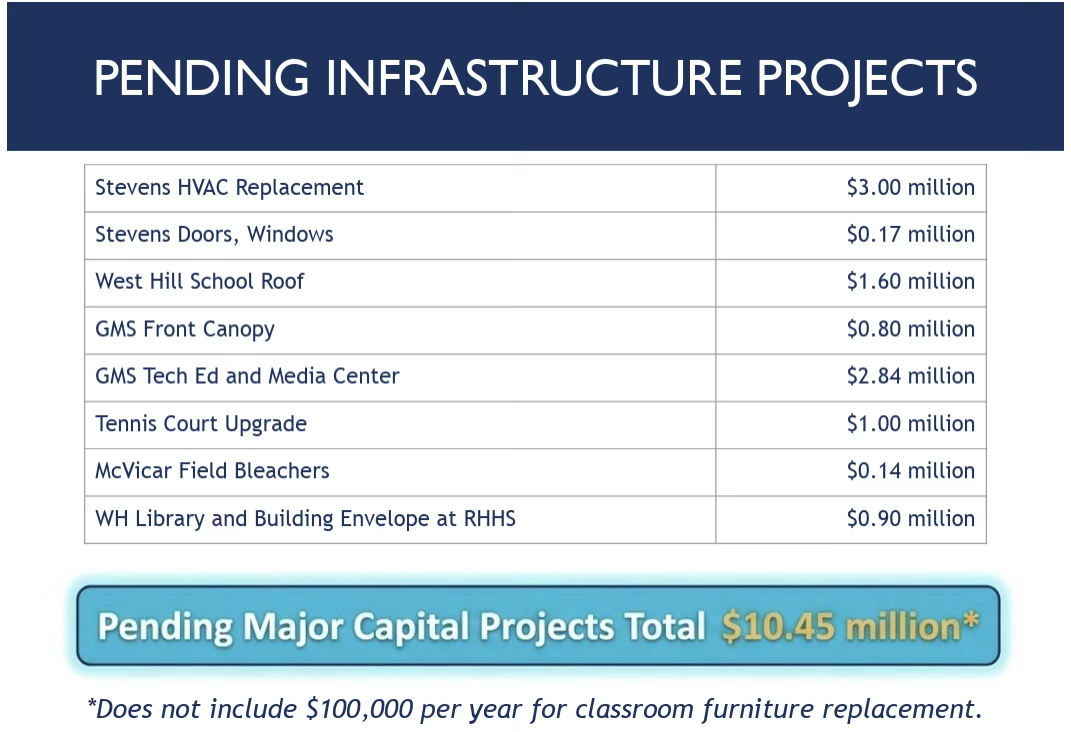
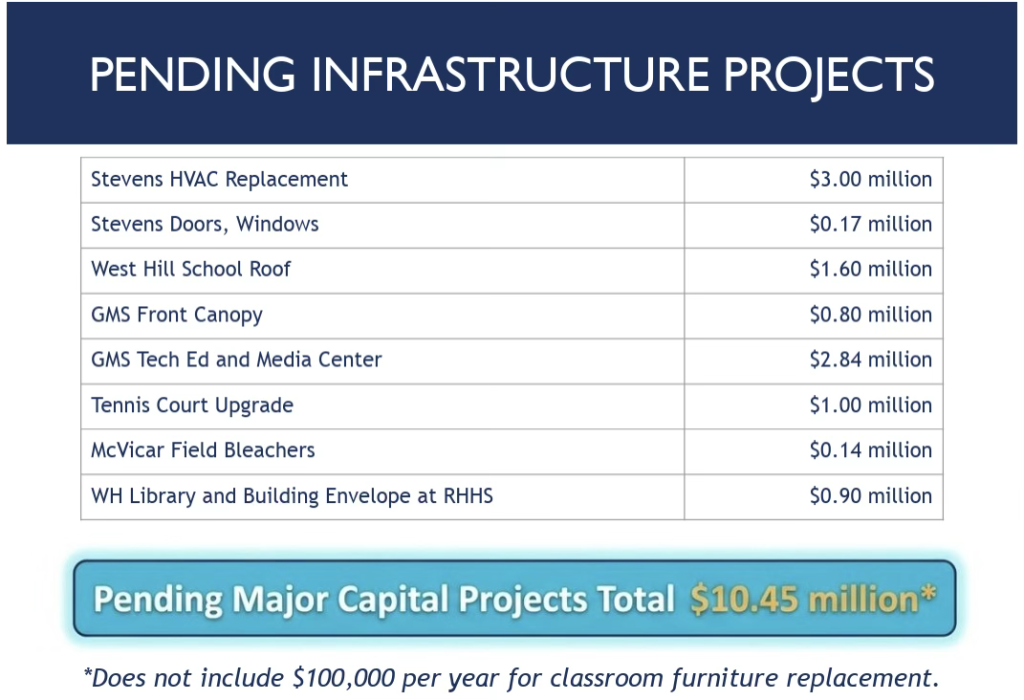
In regards to our school facilities there are many past, current and ongoing projects that need addressing. Each year, the Board makes a request for an investment in our Capital Improvement Plan (CIP) for projects such as HVAC at Stevens School, a new roof for West Hill School, GMS renovations, and other facility improvements. These investments allow the Board to keep our school facilities in the condition our students deserve. In the recent past, the Board’s CIP requests have not been met resulting in a shortfall of many millions of dollars. At times our facilities department has had to put “band-aids” on things like a leaky school roof or stretch out a larger project, like HVAC, over many years which has increased the overall cost of the project. A regular, adequate commitment to the CIP is necessary to keep our schools in the condition we all deserve.
Throughout the budget negotiation process, the Board remained grounded in a few core priorities: supporting student learning, meeting diverse needs, maintaining safe and effective learning environments, and being responsible stewards of taxpayer dollars.
Balancing those priorities is not easy. It requires difficult choices and a clear understanding of both our fiscal responsibility and our obligation to students.
A unanimous vote does not mean every decision was simple. But it does reflect a shared understanding that this budget responsibly meets the needs of our district at this time.
We also recognize that any increase has a real impact on our community. That is something we take seriously. We are committed to continuing to communicate openly, provide clarity, and ensure that residents understand both the process and the reasoning behind these decisions.
Our schools are one of our community’s most important investments. This budget is about maintaining a strong district by supporting our staff and students. This budget has been presented to the Town Council and remains subject to change based on the level of funding ultimately approved. Our schools are a source of pride, and we are committed to making sure they continue to thrive. Despite having one of the lowest per-pupil spending levels in the state, our district is ranked 19th out of 24 in our District Reference Group, showing that we have been careful and responsible with our resources, stretching every dollar to support our students.
At the same time, this level of underinvestment is not sustainable. Our students and educators deserve smaller class sizes and access to the tools and resources they need to succeed, and it’s on us to make sure they have them.
We look forward to working together with the Mayor, Town Council, and our community to keep moving this work forward. Our schools are the heartbeat of our community, and how we support them now will shape the opportunities our students have tomorrow.
We encourage everyone to review the full budget and presentation made to the Town Council and stay engaged.
From the Democratic Delegation for the Board of Education:
- Jessica Loffredo, Chair
- Jennifer Baron-Morfea
- Tom Cosker
- Kristen Dudanowicz
- Maria Mennella