
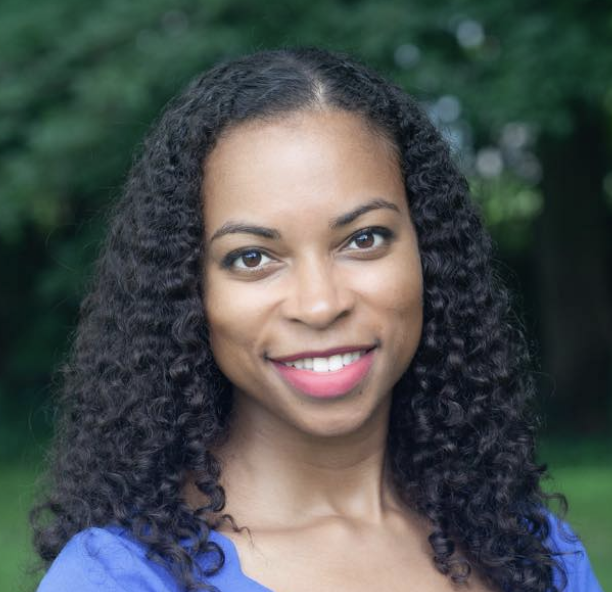

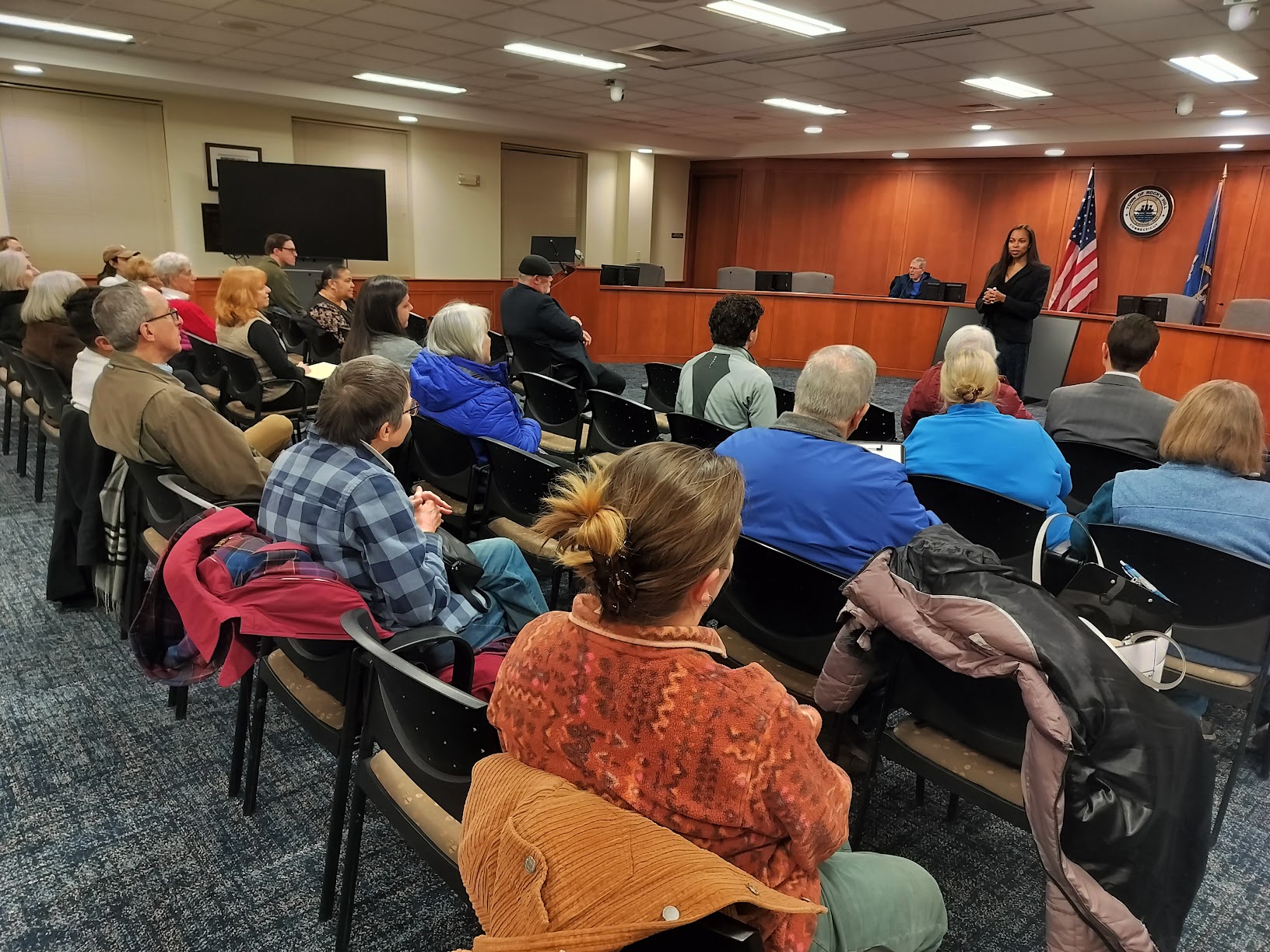
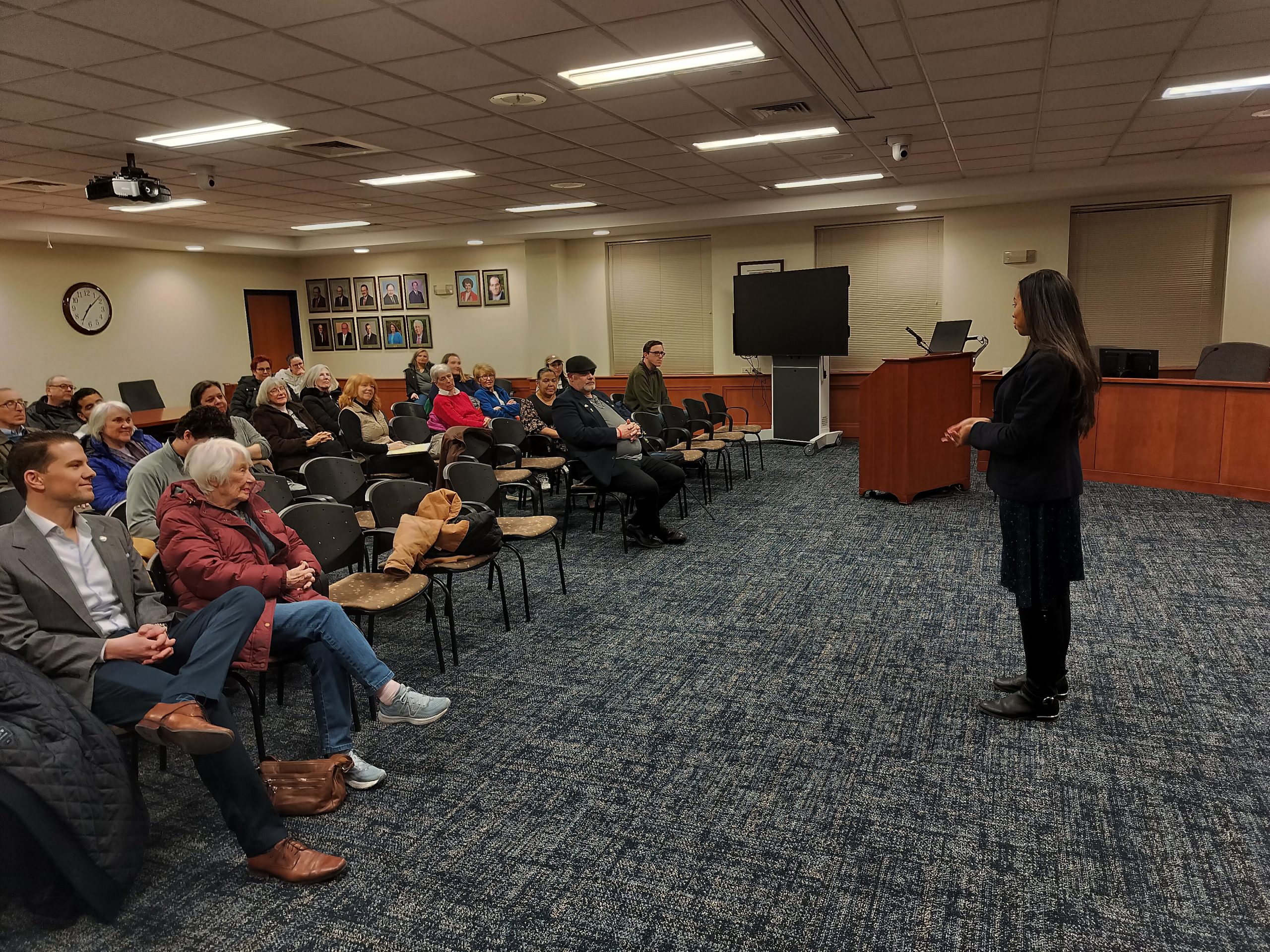
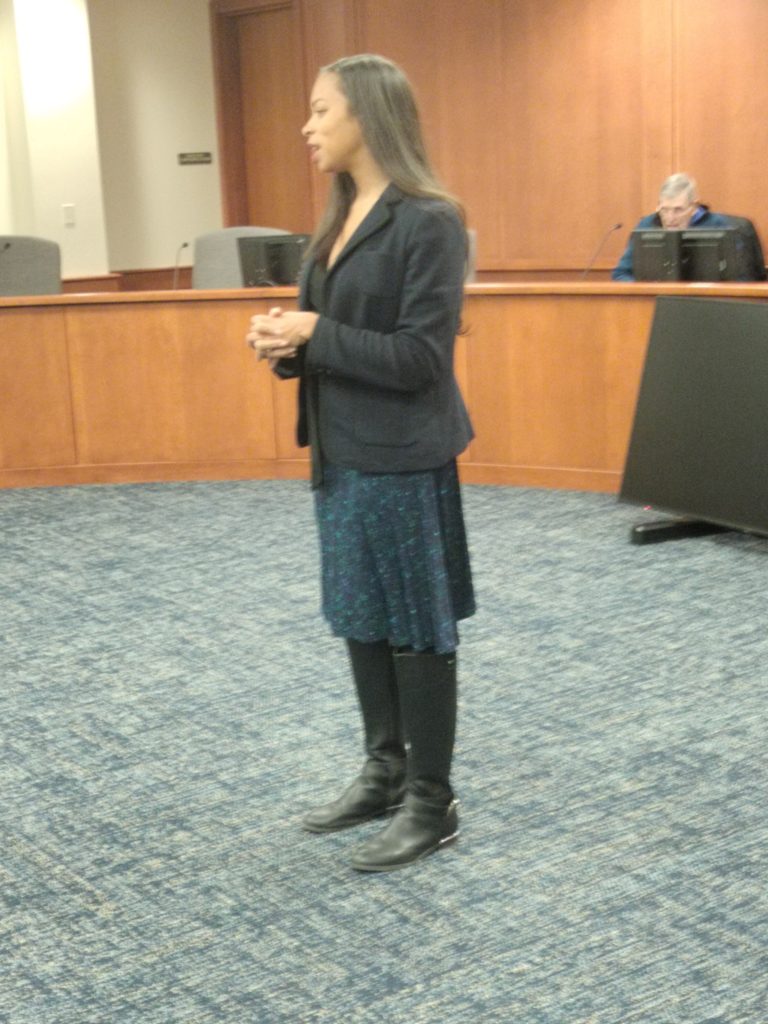
Candidate for Congress Ruth Fortunespoke to Rocky Hill Democrats on February 12, 2026. The following is a transcript of her remarks and responses. The transcript has been lightly edited for clarity.
Good evening, everyone. Thank you for having me. My name is Ruth fortune. I am running for Congress in the first district.
So I am challenging Congressman Larson. It is an honor and a privilege to be here with all of you before I get into what I want to share. Two quick things. First, it’s been really rewarding and gratifying to see people like Zach and Allan who got elected and how they’re serving the majority that you have now in Rocky Hill. It’s just been so wonderful to see. My social media feed is just flooded with Rocky Hill stuff. So I know you guys are so active and so engaged, so that’s been great to see. And then definitely my kids love your Fun City in Rocky Hill it’s apparently the best one to jump in.
But in all seriousness, my name is Ruth Fortune and I’m running for Congress. My journey to becoming a congressional candidate is not a traditional one.
Background
My family moved here from Haiti when I was 12 years old. The first 10 years in this country were undocumented, so that no that means I know firsthand we would like to live with a fear of deportation, and that’s before we had the federal government trivially targeting immigrants when we first got here, eight of us shared one bedroom in my aunt’s house, because that’s all we could afford.
My mom told me that her first paycheck here was $76 here she was having two children. $76 lifted her hand and said, “God, you brought me here. Please make a way for me.” When I graduated college, I couldn’t apply for a financial aid because I was undocumented. Yet by many miracles and things falling into place, I managed to loan the job waitressing and paid my way through college. I did it full time, waitress at night in a weekend, and just four months prior to graduating college, a terrible earthquake ravaged Haiti.
You probably remember that from the news January 2010, in response to that earthquake, the Obama Administration gave Haitians who are here without documentation protected status. And for me, it was transformative. Not only was I able to pivot to applying for legal status, I also learned the power of government as a force for good, when we have people in those positions where they have so much power, if they want to be uncertain, they can even transform a tragedy that happened off of our shores into a lifeline to help a community that is suffering, and currently, the Trump administration is trying to end TPS for Hatians, even though the situation back in Haiti has only deteriorated and gotten worse.
So immigration is near and dear to my heart because of that. But the past three years, what’s been on my mind a lot is this old proverb that you’ve probably heard, and it says something along the lines of society prospers when we plant trees the shade of which we know we shall never sit in.
Call to service
And when I first heard it with the way, it resonated with me. I had just had my third child, one of three children, so my family was complete. I felt like I was living my dream. And I was at an event for an attorney. I’m an attorney, professionally. The former Chief Justice of the Connecticut Supreme Court received an award, and in his remarks, he shared that.
And for the first time, I think it fully resonated with me, and it made me realize that despite the obstacle that I faced, I really had trees that shaded me along the way, trees that have been rooted in hope, in boldness and in love, and back from my experience in 2010 how I became documented. I knew that at some point I wanted to be someone who helps to plant those types of trees. I wanted to be someone who can help others to climb, and lift others as I climb.
When Trump got reelected the second time, given my experience as an attorney, but more importantly, my lived experience as someone who did not have documentation for a decade during for many formative years of my life, I knew it was coming down.
I knew there weren’t 10s of millions of undocumented people who were criminals, who were the worst of the worst. I knew it would not end with people who are undocumented. I knew that people with temporary statuses, like I had for many years, the President had the power to end those statuses for people, and I knew that people with a strong conscience and who wanted to stand up for their neighbors, in some ways, would probably be targeted by this administration.
Some of us are probably more exposed right now, so we feel that burning sun maybe a little bit more intensely than others. But if fascism takes over, if our democracy weakens to the point where none of us really have any due process, and the rule of law is diminished to the point where it just doesn’t mean anything, all of us are rendered weaker, not simply immigrants, not simply people of color, not simply working people. All of us would be threatened by that, and that’s one of the reasons I am choosing to run for Congress now.
Advocating for those with less
When I was undocumented, I did not tell anyone that I was undocumented. The few rare exceptions were my guidance counselor in high school. We needed to know why I couldn’t fill out the FAFSA form for financial aid. So it was a need to know basis. I shared it with her. I find myself doing the opposite of what I did when I was undocumented. Then I knew I did not have the legal status, and I was operating on the outskirts of the law, so I did not have the full protections of the law. So I stayed quiet and I did everything I could. I studied and I did as much as I could to make sure that if an opportunity presents itself, I could take advantage of it.
Before I declared my candidacy, my husband and I, we had a very honest conversation. I have a trust and estate planning attorney. That’s what I do for a living. I plan long term with clients, and we talked about our plan, and I said, if at some point in this process, I go through the process of being denaturalized, because I’m more targeted, I want you to step into this race and finish it. If we have time, we have an entire plan, because this is the times that we are in now. This is a time that calls for people who have a spine and people who know what it’s like to feel the burning sun on our backs as those trees are being cut down.
But now that I am a US citizen, I am raising three young children who I want to live in a country that is free, where they have every opportunity under the sun, I know that I need to do the opposite of that. I need to take as much room as possible and make my voice as loud as possible, not just for the 12 year old girl and me who 26 years ago could not speak English, who 26 years ago would be too scared to show up to school right now because of how immigrants are demonized and villainized by this administration, but also for all of the people who I know cannot fight for themselves right now, I have family members who have mixed status, who are not citizens, who have temporary status that could be revoked. I see their pain.
I see people in my community who are not able to participate fully, whose dreams are put on hold because of the other ways that they are under attack. And as an attorney, I have had clients who came to me who were retired teachers, retired school principals, retired nurses, professionals, who own their homes outright, who had a retirement account far more than my parents ever had.
And by all accounts, they were successful, and they had achieved their American dream. Yet as they aged and as their health began to decline, they would realize that the care that they needed to stay in their home or to simply continue to live on was so expensive that they would deplete all of their assets. And I would have to explain to them that under Medicaid law, which is Federal law, you can only have $1,600 to get the type of services that you need to be safe in your home as you age.
And I think that process made me fully realize that there are policies that are failing us, from crib to coffin, no matter what stage of life you are in, there are policies if you find yourself in just not the right situation that could completely bankrupt you, whether it’s a health crisis, whether it’s an aging parent, whether it’s an aging spouse who’s now ill, or simply child care for your child or a child with special needs, there are so many systemic barriers that are preventing us from living freely and achieving our full potential.
And those barriers are man made. They are designed that way. And the reason why those barriers persist, and a lot of them have endured for generations, and it’s because the people at the decision table, the people with the power to change them, they don’t experience those policies the way the rest of us do
when you have a lot of wealth. If your public school is not being funded in the town that you live in, your kids will go to private school.
When your health begins to decline, a few thousand a month to have a limited aid, that’s pocket change, that’s just the dividends of your stock portfolio, in a way that it could make rough someone else and professionally, I have had a front row seat to watch people’s economic lives unfold. Prior to practicing law as a trust and estate attorney, I was a financial advisor of wealth management, so I got to see how people accumulated their wealth, invested it, passed it on, and sometimes how people also lost it.
My view on how we close that gap between our values and our laws is by having people in power who know what it’s like to have been held back by those policies. If we’re not at the table, we are on the menu.
And it is a unique perspective to be able to bring to Congress, particularly at a time when the wealth gap continues to widen, the income gap continues to widen, and I don’t see any real policies that are addressing those issues at their failure groups. Some of the policies I put forward, and I will be advocating for, for example, include increasing the federal minimum wage to $25 an hour, and tying it to inflation.
My mother is the hardest working person I know. She retired earning about $11.25 an hour working at a meat packing plant in Long Island, where it’s quite expensive to live, and she told me that sometimes tears would run down her face because her gloved hands would burn from the cold. That’s the type of labor she did. If all she was able to do was pay the rent and put food on the table, it was never enough to save for down payment. It was never enough to contribute to a 401k – her employer actually did not even offer a 401 k at her child. If we don’t address those policies, it is our children, our grandchildren, our own futures, that we are putting on hold our own dreams and aspirations that we will fail to achieve.
My view on how we close that gap between our values and our laws is by having people in power who know what it’s like to have been held back by those policies. If we’re not at the table, we are on the menu. The people and the voices that are highly represented in Congress right now is mostly wealthy people, and they’re not just people who acquired the wealth and are self made. There are people who are born into privilege, and that privilege propels them forward. They were not incentivized to change the status quo. They are not the ones who see their aging parents having to go bankrupt because of the cost of long term care. They are not the ones who see their children not getting the support they need in school because their school is chronically underfunded.
I have lived it. I am still very close to it. I’m able to run now as a 37 year old woman who has three children (nine, six and three) who’s retired her parents because they couldn’t afford to retire themselves, because of very deliberate decisions we’ve made as a family unit that now affords me the ability to do this at this life stage. Only about 7% of our members of Congress are mothers of young children, yet we wonder why we don’t have fully funded public schools and paid child leave and early learning and all of those things that we know families need to thrive. My parents now live with us, and I joke that my mom is my stay at home wife, my husband. I work full time, and my mother is so incredibly thrilled to be at home. Wakes up every day with her grandchildren in the house, the way I did with my own grandmother when I was growing up in Haiti.
Having a mother who is 73 who is incredibly healthy, who is the most patient and nurturing person has afforded me now, the ability to be able to run for Congress as a non, as someone who’s not standing to inherit family wealth, someone who has worked to get to where I am. I’m happy to take questions at any time, and I will tell you my American dream for my family unit has come to fruition.
Our democracy and the benefits we reap from being a democratic nation, they are not self actualizing and self perpetuating. They take work, they take action, and they take a lot of intentionality on all of our collective parts.
My mother used to always tell me that my education is my inheritance, because there’s nothing else she could need for me. She herself had very little formal education. Her parents didn’t afford to offer that to her in Haiti. So when we were in Haiti and she worked, she put us in the best private school that she could afford when we came here, we just frankly luck out that we were in a school district that was funded. I have state honors classes, l study at Syracuse University as a high school student, the first of my families to graduate high school, to go to college and eventually go to law school. Now it’s come full circle.
This past August, my youngest started preschool, so all three kids are in school in the first day of school, my mother also returned to school in a literacy volunteer program where she’s now learning English and my whole program. What she wants for herself to is that she will graduate with her GED in a few years. This is a story. This is a dream that, frankly, really only happens in America and under the Trump regime, my story would be extinct. And this is why, as hard as it is, as uncomfortable as it can be, I am choosing to run for Congress. A lot of the cruelty is sending out of Washington to speak. Instead of shrinking and being quiet like I did when I was undocumented, I want to be loud.
I want that story told, because if we don’t fight for it, then who will and the way that I approach this fight is inherently very different than the way others who come from a privileged background do, and it’s because, in many ways, I’m not picking this fight. I’m just finishing the fight that’s been brought to me. I thought now I had all of the protections under the law that my family was comfortable and safe, but the reality is, I can be denaturalized under this administration.
I’ve seen it happen in Haiti. I’ve seen it happen in other countries around the world. Our democracy and the benefits we reap from being a democratic nation, they are not self actualizing and self perpetuating. They take work, they take action, and they take a lot of intentionality on all of our collective parts. I’m able at this stage in my life to do a lot more. I put my career on hold for a year so I can do this and run for Congress. I understand that everyone can do that, particularly not at this life stage.
DTCs can encourage a competitive primary
But we do need to do more. If we want real change, we need a behavioral change on our part. Many of you here are DTC members and likely to be delegates at the convention, you have so much power when you’re a voter versus a delegate at the convention or a DTC member, you wear a different hat as a voter, you put on your hat, you go to the booth, you vote for whoever’s on the ballot, and you vote for your favorite candidate.
People in this room, most of you, are also stewards of democracy. You have the ability to ensure that voters actually have a choice at the ballot box and allow to have robust, competitive primaries. It is undemocratic that we have a congressman who was elected in 98, serving since 99 who has never faced a primary challenge.
Yes, there were many years when no one tried to challenge him, but there were also years when people tried to challenge him, but he did the challenges never got from the ballot. Most recently was in 2022 we have someone who raised half a million dollars, did not get the delegate support at the convention.
I need 15% just like every candidate does, you need 15% at the convention. Did not get enough to get 15% then he went and collected about 5700 signatures. He needed about 3900 signatures, about 2000 signatures got disqualified. Then we complain we can’t be a party of Democrats that says Republicans are choosing their voters through gerrymandering when as Democrats who have the power we choose candidates and expect voters to fall in line, democracy works best when people have options and have choice, if we’re the pro choice party, let’s bring that pro choice to the ballot box.
My call to you is to urge you to consider the very weighty duty that you have, especially at these times democracy, rests in the hands of every single one of the 27 towns in the district and every other town in Connecticut and every other town throughout the country, when you’re engaged in the way that you are in the political process, you want to consider this duty. H
ow do you do it more strategically? How do you do it differently so that we get a better outcome? Because we know the way we’ve been doing it all along the way, what it has done is protect incumbents and perpetuate the status quo. The status quo is not working. We have a part to play in it. To do things differently. The thing that you can do differently is ensure that we have a primary in this district for the first time this century.
Questions and Answers
Rocky Hill Democrats asked Ruth about her policies and plans. The questions have been shortened and responses have been edited for clarity.
You were the first candidate to announce your candidacy against Congressman Larson in this race, and that took a lot of courage. Was there a particular moment where you just decided now is the time I need to take this on?
I had a lot of sleepless nights after Trump got reelected. I had someone sleep boundary. Most of my children, when they cried at night, my husband would wake up. Yet I had sleepless nights when Trump was reelected. The breaking point for me was my husband saying, if you don’t run now for office, you know what? I’m going to run because one of us needs to do something.
We have the family infrastructure in the means to do more. One of us needs to do more, and that was ultimately what gave me that final push. And I had been eyeing the campaign school at Yale for many, many years, so I applied. I did the training to learn how to operate a campaign. I had worked on the Obama campaign in 2012 in Des Moines, Iowa, but I was only 23, 24-years-old. I was a field organizer. It is very different than running your own campaign as a candidate and doing everything.
And when reporters first reached out to me, they said, you know, we’ve heard rumors of people running to run. It’s very taboo, particularly in Connecticut, to challenge. But rest assured, now that you’ve broken the ice, you can expect to hear more candidates enter the race. Sure enough, it happens, more people enter the race. At least one has dropped out in here I am.
This is not something I have full control over. It takes a village. It takes a lot of people doing a lot of work, a lot of border contact, a lot of volunteering, some money to advance whatever the campaign needs. But it is something that at this time, it’s easier to run for office, as hard as it is, and as much as it seems it takes courage, it’s easier to do this than to not do anything at all.
My family came here for economic opportunity. We were, we weren’t super well off in Haiti, but my mother had a state job. She said she was the main quote from the Canadian ambassadors. And even though she was working in their home and cooking for them all day, it was a far better job than most patients had. So I went to private Catholic schools. I had food every day. I never went to bed hungry. We traveled once to the US event, which most patients would get the chance to do. We came here because my mother had the foresight to see that we would not be much better off in Haiti if she stayed there.
And so now, seeing what in the US, and I’ve gotten to this point, and to see so many families not have their children have a better future than their parents did, it’s heartbreaking. And I want an America that is deserving of what I envisioned. Envisioned it when I was coming here.
You know, experiencing America as an immigrant, it’s like Christmas Day as a child. You know, when Christmas Day happens and my children see all their presence, just that light and fire in their eyes. That is how I felt about America. It still is how I feel about it. But now I understand that when I was reaping a lot of these benefits, there were people working really hard behind the scenes, and now I need to join the ranks of the people who are working really hard to maintain that and to make it even better.
Because there are people who are born here, children raised here, who never had some of the opportunities that I had, like going to Syracuse University as a high school student, fully paid for through My school, AP classes in my school, a guidance counselor who knew me by name was very invested in ensuring I got into a college. I’m on the Board of Education now in Hartford Public Schools, and unfortunately, there are students who are not able to fully meet their needs because we don’t have the resources.
We have the resources as a country, we’re simply not investing those resources in our people, or at least not in certain types of people in this country.
I applaud you for going against Congressman Larson. A big portion of his base are the older people based on his position for Social Security and continuing that effort. You have plans for that?
My parents are on social security, and I can tell you, it is not enough. Social Security needs to be overhauled. I was just at an event with Congressman Larson last Thursday, I believe, and he was saying that we haven’t had an issue.
We haven’t had really meaningful social security legislation in over 50 years, but he’s been in Congress for 28 of those years. I want to fight for social security as well. We need to lift the income cap and so that I don’t think there should be a gap. I think if you’re earning a lot of money, you can afford to pay Social Security taxes.
We can afford to increase benefit for the lowest recipients on social security. The way we pay out benefits needs to change right now.
I used to do a lot of wealth management, so I dug really deep in the weeds in Social Security, because that’s the thing. I just advise clients on the way we pay Social Security is based on your 35 highest years of earning.
You know who’s penalized by this equation? Typically, women: mothers who have to step out of the workforce to raise their children, or care for a loved one who’s sick, a parent or their in-law who’s sick, those are things we need to change about Social Security, it is part of Congressman Larson’s plan.
He simply hasn’t been able to bring it to fruition. And I know one of the things he said is that minority leader Hakeem Jeffries, has promised that Social Security will be a key priority the next legislative discussion.
The reality is, whoever is the Democrat who takes over will take on that baton and continue to fight. There is sometimes merit in passing on the baton and letting a fresh voice. Fight the fight and continue it on.
I value Social Security. I will fight for social security. I want to strengthen Social Security. There’s the work to be done. The idea that some I’m not just speaking with Congress, the idea that some of our elected officials have that they are indispensable to the fight is simply wrong.
Sometimes they’re in the way of progress because they’ve been there so long. They’re so set in their ways. They have all these other political calculations that they’re making. Sometimes, if you let new voices in, things actually can get done better. I served on so many boards, from nonprofits to board of education and many other boards.
Every role that I’ve served on that was really well run. Had term limits, they had people coming in and out, and they have a diversity of experiences. Did you bring different perspectives?
And I can tell you, I’ve already had experiences where I’m in the room and I’m the only one who has had the experiences that I’ve had. I’ve been in the courtroom advocating for clients where it wasn’t really my command of the law that won a case, it was how I could relate to my clients.
For example, I take in on a lot of volunteer attorney representation of immigrant children because it’s near and dear to my heart. I was representing three young siblings from Guatemala. The judge had gotten lost in something that was completely unrelated to the case, and I had to bring about a set your honor, when we don’t decide today in favor of these kids, this family’s going to have to come back. One child will each have, will have to redo the application.
It’s $500 he called me said, “Wait, stop. Check. What this clerk says is it really $500 that they would have to pay again?” The clerk said, “Yes.” He said, “You know what? I think I know what I’m doing,” and he granted the petition right then and there. It wasn’t because I knew the law; I did, but it was knowing that this financial burden my clients would have, and I communicated it to the judge.
I could have just kept it to myself, but saying that out loud, being able to look at him and say, it makes that difference. And it’s the same idea in Congress, you have a large body that is collaborating and compromising. When they all have that same experience, there is a part that is missing, and that’s the experience of the people who are not in the room that is incredibly valuable.
I’ve been reading books like Abundance and Breakneck are an autopsy of the Democratic Party. How can we focus on results? They argue that we have too many lawyers in Congress. So my question is: how would you kind of break through kind of disorderly obsession with regulations and focus on on actual results?
My view of the law is that it’s not simply to regulate lives. It can liberate lives. And I lived that myself, and that informs how I approach everything.
I am a lawyer. I think the legal training has equipped me to serve in Congress, but I wasn’t a prosecutor. I wasn’t in the public defender’s office. I was an estate attorney. Before that, I was in wealth management. I have an undergraduate degree in corporate finance. I have been breathing economic stuff at the personal level for the past 13 years. That is a perspective that is lacking.
One day at work, I was sitting across a client with a colleague worth half a billion dollars, and he was telling me that his five children were all in their 50s. Never worked, because they never had to: their father’s worth half a billion dollars. I go home, and my mom is telling me that a friend who helped us out a lot when we first got here in the US had passed away and her children had no money to bury her, the juxtaposition of the extreme wealth and extreme poverty, I have seen it.
I’ve had a front row seat to that. I have really strong ideas of how to address that in a way that I have not heard from any candidate in this race, and frankly, from a lot of our Congress members, including something like our trust laws. Here in Connecticut, we adopted a new trust code. If you’re very wealthy you can create a trust. Can anyone guess how long your trust can go on for your descendants in generations after generation?
800 years.
If you think about, why are people hoarding wealth? If you have more money than you’ll ever spend in multiple lifetimes, you set it aside for your descendants beyond what you will ever meet, and it’s creditor proof so they get divorced, and divorcing spouse doesn’t get a penny if they get sued, that creditor doesn’t get access to it, because in a trust, you can put all of the bells and whistles and essentially make it their own little private economy to sustain them from generation to generation to generation.
I am not against trusts. I’ve created a trust in myself. I draft trusts. But when we have so much wealth, we have generations of people who can’t just have complete protection from any sense of insecurity, while other people are literally starving. That is not healthy for democracy, but and I’ve seen it through my work, I have ideas of, how do you make things more equitable? And that’s the lens that I approach a lot of my policies with.
Can you speak on on what you would do for someone who fights for disability and can’t get anywhere because they keep seeing many different doctors and not their own personal care physician?
Yes, thank you for sharing that. You’re experiencing the system, frankly, in a way that it’s designed to be. It’s designed to be difficult when you have for-profit healthcare: the way companies make money is by denying claims. There are people and children and adults and seniors who will never be profitable to insure. That’s why taking some of the profit out of health insurance matters. I want universal health care for everyone. If someone has private health insurance that they absolutely love, keep it, but everyone should have access to health insurance. I have a client who I did her plan her two year old.
Now a two-year-old was diagnosed with a severe genetic disorder, and she needs 24/7 nursing care at home after spending a year in the hospital. This little child will never be profitable to insure. And if we don’t invest in our own people, we don’t provide the care that they need.
It is people suffering, people dying, people not getting the care that they deserve. And we have the resources. I keep coming back to the fact we are the wealthiest country that has ever existed in the history of time. We have a lot of medical professionals. We’ve made more advances in science to treat and prevent so much illnesses. We’re simply not allowing access to it to the people who need it the most.
Presumably Democrats are not going to gain full control of all three branches. In that case, what compromises do you see yourself being willing to vote for?
Compromises are tough. I think in politics, you do have to compromise. But I think we’re compromising sometimes in the wrong places, in the wrong areas, and we show up to the table already willing to show that we’re going to cave if we make up the shutdown, right? We held firm for so many weeks and then got nothing and decided, you know, what done? Or recently, the seven Democrats voted to fund ICE. We’re choosing to compromise the wrong issues. We’re also not setting the goals high enough.
When I say $25 an hour, minimum wage, I’ve had some people say, “Wow, that’s really high. It’s never someone who can sustain themselves or their family on $25 an hour. ” They are always people who earn more than that.
But we have people like my mother, people who are struggling to put food on the table and pay for rent. They are subsidizing corporate profits. That’s one area where I refuse to compromise, because the people who have the least to offer are the ones who are sacrificing the most.
I’m willing to consider, how do we get universal health care? Do we want Medicare for all? Do we do we do a bit of there’s some areas where there’s many ways to deliver the result, but how we get there may differ. There’s areas in room for discussion.
I’m willing to compromise on, how do we secure our borders? Every country needs to have secure borders. How do we make sure it’s secure in a humane way?
What I’m not willing to give up on is a path to legalization for people who’ve been here for decades, because there are people who’ve been here, who’ve raised American children who have no path to citizenship, no path to legalization, simply because of how they entered this country.
And knowing that makes me more strategic in how I approach those discussions. It makes me more strategic in terms of who do I pull to bring those narratives of what move people. When I was organizing for Obama, you know, we had a saying that they came for Obama, but we stayed for each other. We stayed for the stories we share, the bonds we developed.
It’s knowing, how do you find the right person to illustrate the pain that is being felt so that you can move the needle? And I don’t see enough of that creativity being done.
I mean, for example, right now, Congressman Ayanna Pressley from Massachusetts, she introduced a discharge petition to help Haitians whose CPS is about to end. The administration already tried to end it. And usually, right, traditionally, you think, well, immigration enforcement, that’s all within the purview of the executive branch, and there’s nothing the legislative branch could do. But she introduces this charge petition, and I have had every Haitian who’s on TPS has called me to say, call your Congressperson. John Larson has signed it, by the way. Jim Hines has not, please call his office.
And that’s a creative way to bring about solutions. I’m not seeing enough of that from so many of our leaders. And having a safe blue district, we should be leading the charge. We have the base to support a congressional candidate who can be bold, who can command the conversation and frame that conversation in ways that some other congressional members don’t have, and in some ways, it is a squandered opportunity to not have a more progressive, a more forceful voice representing the first district.
Will you have the opportunity to participate in a primary debate?
Thank you for that question, I have been pushing for a debate. I’m in touch with three different networks trying to push for a debate because I think it is good for voters to get to see all of the candidates in real time. When we’re all on stage, all we have is ourselves, right? Not all of the resources. Some have millions, some don’t, to be able to see what are the policies and really, as best as possible compare apples to apples. But that is something I am pushing for right now.
There’s no date, no location. As far as I know, I am the one person who is pushing to have a debate in this race.
So I’ve been voting for Congressman, Larson ever since I was 18, ever since I could vote. Give me one thing that would make me vote for you, as opposed to Larson, and one thing off the top of your head that when you get to Washington that you will do differently?
That’s a great, twofold question.
One reason why you would vote for me and not him. The experience that I am bringing to DC is an experience that is missing, whether it’s a perspective of a mother with young children, someone who’s an immigrant and someone who in her own lifetime, has faced systemic barriers and overcome them. We simply do not have a lot of those people in Washington, DC. They are far few in between.
And then one thing I would do differently is that I would be, I think in my heart of hearts, I am very much a grassroots organizer. I would be more present in this district, and knowing that I have such a strong voter base, I would like the fire under my supporters to be loud, to be a voice calling for the things that we need, from immigration reform to increasing the federal minimum wage.
Those are things that no one Congress person can do alone, but you can bring a squad to fight.That’s how you can get results. So those are two things I would do differently.
What are your priorities?
There are some positions where I differ from other Democrats, but I think mostly we agree on a lot of the issues priorities.
My priorities are addressing the needs of those who are suffering the most, because when we take care of the most vulnerable, we’re all strengthened by that, and that’s why I prioritize raising the federal minimum wage to $25 an hour. And tying it to inflation, the amount of wealth that someone can leave to the beneficiaries if they die is tied to inflation.
Right now this year, it’s $15 million you know, before you pay any penny in a state tax, you can leave $15 million you beneficiaries completely tax free. You die in 2027 it is 15 million plus inflation. 2028 more inflation. It’s, it was permanently extended in the big, beautiful bill, whereas the ACA tax credits were not. So that shows what their priorities are, at least on the Republican side.
Now it’s a permanent extension. Congress would have to take action to reduce the estate exemption amount if we were to lower it. That’s why I think we need to tie the federal minimum wage to inflation. Most of us don’t live off of inheritances. We live off of our wages, and we know inflation happens.
I’m all for wanting to reduce cost. It is a very hard thing to do, and we have so many levers we can pull in government, but what government can do is compel companies to pay their workers a living wage and also in support of helping small businesses to do that, because right now, we are subsidizing businesses. It’s simply that we’re subsidizing the corporations, the mega corporations, that are making billions in profits the small businesses can’t even compete with those corporations, because they get all of the subsidies to open a warehouse, open a huge new office in our communities, whereas if I’m trying to start my own business, I have to do it all myself in there’s no grants or any subsidies available, so I have to flip that model.
We increase the federal minimum wage, we funnel money into the small businesses through the forms of grants, zero interest loans or local interest loans, get the money into the communities and have that money stay in the community. That’s one of my top priorities, because I know for my family, for the families I know that are struggling, that would make the biggest difference.
And when you tie it to inflation, you maintain that purchasing power most companies, the biggest expense is labor. You know that you just keep increasing prices, then wages are tied to inflation, right? So now you’ll have a build and check they’re not just going to keep increasing prices, because then their labor cost is going to get increased as well. And there’s other ways to supplement that, you know, maybe requirements with what the ratio can be to what the highest person earning in the company is versus the lowest earners or the median earners.
But for me, it’s really hard to pitch democracy as something we need to fight for. When democracy has delivered us the biggest wealth gap that we’ve had, we need to show people that democracy can actually do good, and if people can feel like they have enough food, they can pay the rent, they could dare to take time off, they’re more willing to think that democracy can deliver something and find some more reasons to buy it. So that would be my top priority. A lot of the issues we face. I think working people and poor people ultimately stem from they don’t, we don’t earn enough money.
Student debt: it’s a bubble that’s at some point going to burst. And you know, the cost of not just advanced degrees, like a law degree, but even a four year college education has exploded. What do we do?
I want to have free public university, whether it’s two year colleges or four universities, tuition free to families that are earning $150,000 or less students from those families and have that income tied to inflation. I want to have tuition free vocational school, because college is not for everyone.
There’s other needs, and there’s other professions that are really great professions that we’re not really supporting, and there’s really a need right now, and we’re not having enough people be trained. So those are some of the things I want to do to make sure that people who are going through school are not coming out settled in debt.
In addition to that, I think government can and should regulate what the interest rate should be on private loans. You know, I’m blinking on which president this happened under. But initially the plan was that government was going to offer all of the loans for students, and then it was decided it’s better to privatize some of that, because it would inflate what the national debt would be that’s why we have the system that we have. That’s why it’s not just the government that’s lending money at maybe more reasonable rates. That’s something we can change.
And the idea that student debt gets taken out of Social Security wages. So if you fail to fail in debt now you’re retired, you’re co collecting, you’re meeting with Social Security, student debt gets actually taken out of that that’s something we can change as well.
And the reason why these are not priorities, because people who get to Congress, they don’t usually have student debt. Paying $80,000 a year is pocket change for their parents and their families. They had accounts that were fully funded before they were even born, and they have trust funds that can pay for all of this. I’ve seen it in my work: the grandparents who started funding for college education for grandchildren who didn’t even exist yet.
So that disconnect is real, and we don’t address that until people at the table understand what that pain is. I have friends and peers, people my age, younger than me, who’s put up having children, some who don’t want children at all, not because they would want kids, but because they feel like they can’t afford it.
The home that I bought, I you know, my husband, I bought our house when I was 30. That is unusual. The average age for buying a home keeps going up and up. Now, people in their late 30s are buying their first homes, and we bought our house eight years ago. It’s appreciated 50% already, 50% in eight years.
That’s great if you own, but for someone who’s renting, someone who’s trying to buy, it’s simply not sustainable. We can invest in building more affordable housing, in investing in the infrastructure that builds residential homes. Those are all things that we’re not prioritizing because it is so removed from the day to day experience of the people in Congress who are legislating.
Connecticut has one of the highest wage per hour in the country, and $7.50 is the average in our country. $25 is a little bit too much.
There are two areas where you can fall out of the middle class very easily, all have to do with health care, because any of us are just one bad health experience away so many of us one bad health experience away from depleting all of our savings and finding ourselves in a really dire situation.
So that’s why healthcare is a key priority, and for me, in addition to that, it’s including long term care under Medicare for our seniors, and I’ve seen it in my personal work, that is the fastest way that middle class seniors get impoverished.
I had a 98 year old client tell me she feels guilty for having lived this long because she’s using her assets now to pay for her care, and now she won’t leave inheritance or any legacy to her kids. She felt like a burden to her family.
We can choose to take care of our seniors. Long Term Care is medical care, so I think universal health care, and including long term care under Medicare is a way to secure that people in the middle class can stay in the middle class if they experience some type of health tragedy or some type of, you know, health issue.
So that’s another big priority for me, and with respect to he minimum wage and it being somewhat higher, I mean, I can tell you, for my relatives and my family, earning that little bit of money meant that there was over 20 of us living in one house, because that’s the only way we can stay housed and earn that little bit of money.
Some Sunday mornings, when we’re getting ready for church, we run out of hot water because it’s just we don’t have a boiler. That’s the same 20 something people in 1500 square feet. We are fortunate my home. It’s one privilege of my life. But I’ve had relatives when they fall in hard time, they’ve come to live with us.
We have the space, and it is painful to see some of my relatives, who are, you know, starting families or about my age. I don’t see how, in this economy, some of them are earning in Connecticut, $20 an hour work overtime. I don’t see how they will ever save enough for down payment to ever buy a home. I don’t see how they will ever get out of just like the day to day, where they could just be a month away from bankruptcy.
$25 an hour: I know my family costs a lot more than that to raise. It sounds like it’s high, but the floor is so low and and this is the one thing that is very that is me at my core, I will always be bold and audacious.
I’m never going to compromise before I even get to the table. The journey to go from immigrants who did not speak English 26 years ago to running for Congress, that was more uncertain, more arduous, in the next six months, to get to the primary, to try to become the nominee for this party. And I never compromised. I’ve always been audacious and bold. It’s served me well, and if I go to Congress, that’s the person you’re going to get.
We can pay people $25 an hour, and if you live in Iowa, and maybe it’s a little bit more good for those people, but everyone who is working deserves a living wage, and it should be a wage where they have some dignity. It is unconscionable that we have people working full time who rely on SNAP benefits for food.
It is unconscionable that food banks the primary household they serve, or ALICE households. ALICE stands for asset, limited, income constraint, employee, and you know who most of those Alice households are, households led by single mothers who work full time jobs, sometimes multiple jobs. Probably don’t qualify for that benefits because of their income. Yet it is still not enough. They have to go to food banks.
Food banks have become huge conglomerates, which we need because people need food. So I’m all for supporting people, but the idea that the infrastructure now is food banks, where they have warehouses with logistics almost as complicated as Amazon to provide working families with free food. That is a design flaw.
When I have clients who are wonderful and very philanthropic and want to put millions nonprofits to help people, I’m so grateful that they want to do that, but the fact that we have a society that requires philanthropy for people’s basic necessities, that is unconscionable, and it is not new.
Martin Luther King, Jr, decades ago, was saying, when slaves were emancipated and they got freedom, they got the freedom to be homeless, the freedom to be broke, the freedom to be poor and the freedom to not work, that has persisted in other ways in our society. And I will not be the politician who says that is good enough, because I’m okay, the people I know are okay. I think we need to start negotiating up and fighting the fight where we know it needs to be fought.