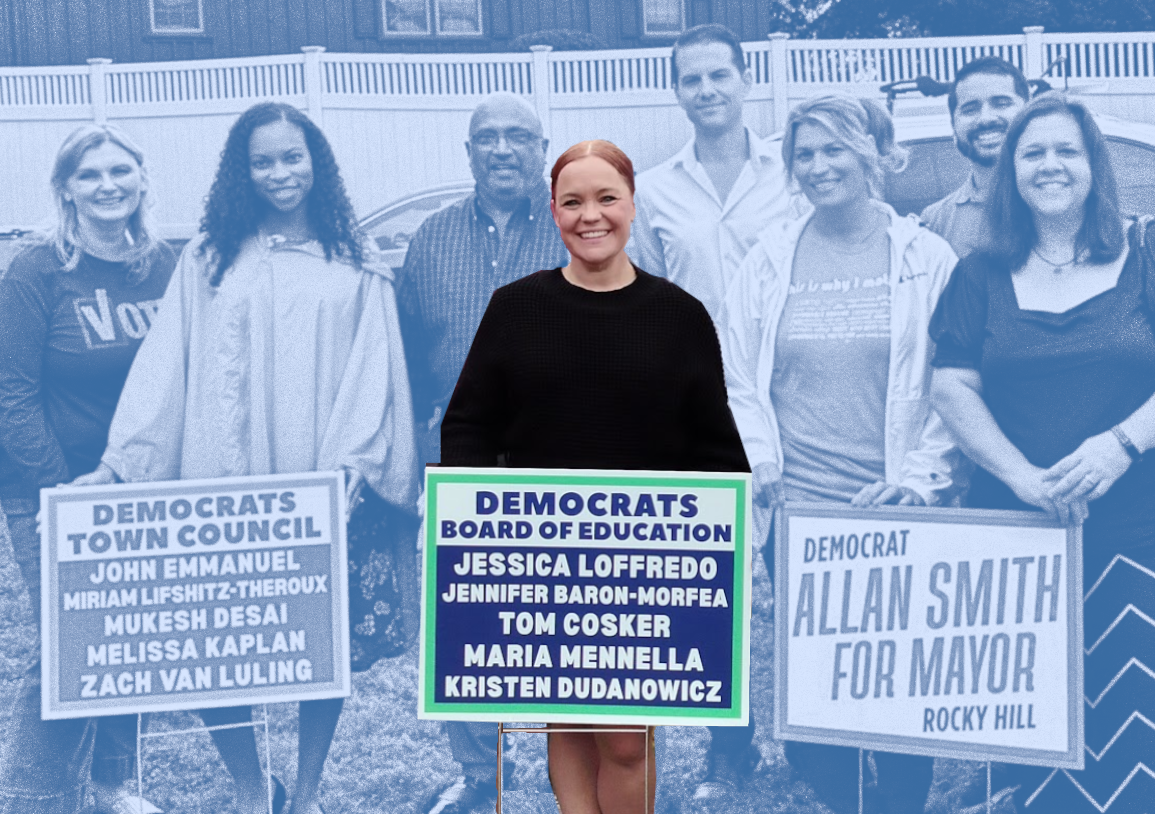
I’m running for the Rocky Hill Board of Education because I believe our schools are the foundation of our community—and right now, they are under pressure. Families and educators are feeling the impact of budget constraints, infrastructure challenges, and decisions that don’t always reflect what’s best for students.
First and foremost, we need to fully fund the Board of Education’s recommended budget. When we don’t, we see cuts that directly affect our kids. This year, those cuts meant the elimination of world languages at Moser, the loss of the summer enrichment program, and the merging of elementary special education programs.
These aren’t just line items in a budget. They are opportunities, supports, and services that shape our children’s learning and development. Research is clear—students who have access to enrichment and world languages in elementary school build stronger foundations for academic success later on.
We also need to invest in our school buildings and infrastructure. Recently, Rocky Hill had to reallocate insurance dollars just to fix the roof at West Hill. That roof matters—but while we address it, the HVAC improvements at Stevens were once again pushed off. That project has now been delayed multiple years.
We cannot keep kicking these projects down the road. Students cannot learn and teachers cannot teach in classrooms that are overheated in September and freezing in January. And while we wait, energy costs remain high because we’re relying on outdated window cooling units instead of modern, efficient systems. Fully funding the capital improvement plan isn’t optional—it’s essential if we want safe, healthy, and sustainable learning environments.
Another pressing issue is class size. Right now, our elementary classrooms are too large, with some sections climbing well into the mid-20s. That’s above both the Connecticut State Department of Education’s guidance and national recommendations, which generally set the ideal range at 15–20 students for early elementary. And it’s certainly above what research shows is most effective for student learning and teacher well-being.
Smaller class sizes allow for more individualized instruction and reduce teacher stress and burnout. As teachers retire or leave, we must replace them—not leave positions unfilled. Managing class size is one of the most important ways we can meet the needs of all students, especially as we see more children with diverse learning needs in every classroom.
Finally, I want to address how Rocky Hill invests in its students. Today, we spend just over $20,000 per pupil each year. That’s higher than some nearby towns like Wethersfield and Farmington, but still below the statewide average and behind neighbors like Glastonbury and Newington, which are investing closer to—or above—$21,000 per student.
Within Hartford County, Rocky Hill sits in the middle of the pack. We’re not at the bottom, but we’re not leading either. And when we look at the big picture—class sizes rising, capital projects delayed, and programs being cut—we have to ask: is “middle of the pack” good enough for Rocky Hill’s kids? I don’t think it is.
Rocky Hill is a community that cares deeply about its schools. I know that because I see it in our parents, our teachers, and our neighbors every day. But caring isn’t enough—we have to act. That means advocating for budgets that reflect our values, protecting programs that give students a well-rounded education, ensuring our facilities are safe and up-to-date, and keeping class sizes small so every child has the opportunity to thrive.
I’m ready to bring that fight, and that commitment, to the Board of Education. I ask for your vote on November 4— both for me and all of Row A so that together we can make these plans a reality and ensure Rocky Hill’s schools are strong, now and for the future.
Opinion piece: This article reflects the position of the author and not necessarily that of the Democratic Town Committee.
